

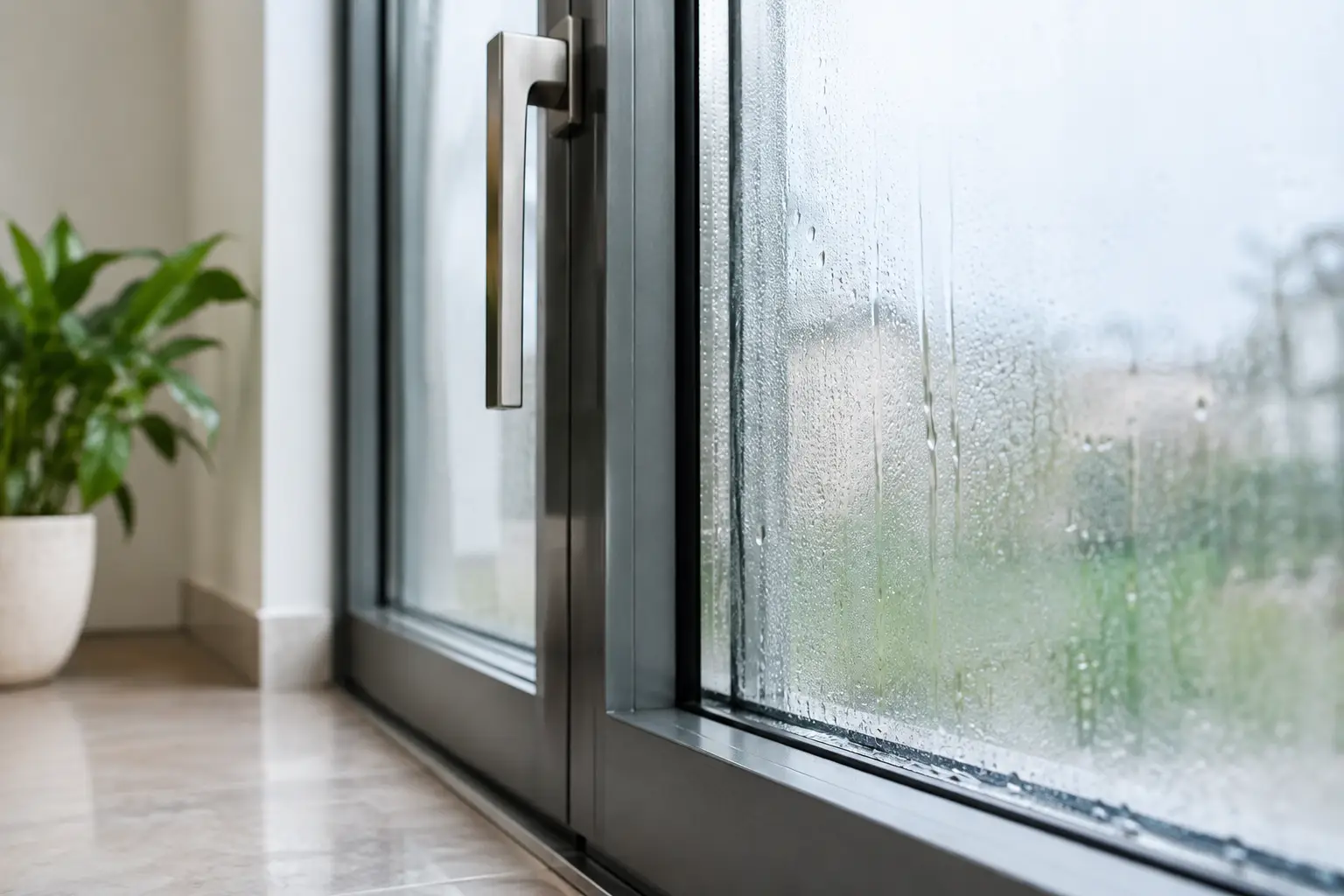
Why Aluminium Door Condensation Happens at Home
A clear film of water on the inside of an entrance door is easy to dismiss after a cold night. Yet persistent aluminium door condensation deserves attention. It is rarely a sign that the door is letting rain through. More often, it shows that warm, moisture-laden indoor air is meeting a surface cold enough for that moisture to turn into water.
For homeowners investing in a refined, made-to-measure entrance, the distinction matters. Condensation can affect comfort, obscure glazing and, if left unchecked around surrounding finishes, contribute to mould or dampness. The right response starts with understanding where the water is forming and why.
What causes aluminium door condensation?
Air always contains a certain amount of water vapour. Cooking, showering, drying clothes indoors and simply living in a well-sealed home all add to it. When that air touches a colder surface, it cools. If it reaches its dew point, the vapour becomes droplets.
In winter, entrance doors are especially exposed. The exterior face sits in cold air while the interior is warmed by central heating. Aluminium is naturally conductive, meaning it transfers heat readily. A poorly designed or older aluminium door can therefore create a cold internal surface, particularly around the frame, glazing edge or hardware.
Modern entrance doors are engineered differently. A thermally broken aluminium profile includes an insulating barrier between the internal and external sections of the frame and sash. This reduces heat transfer and helps keep internal surfaces warmer. It is a significant improvement, but no door can eliminate condensation if indoor humidity is unusually high or ventilation is limited.
First, identify where the moisture is appearing
The location of condensation gives a useful clue. Water on the room-facing surface of the door or glass is internal condensation. This is the most common type and is usually linked to household humidity, surface temperature or both.
Moisture between panes of double or triple glazing is different. A sealed glazed unit should keep its cavity dry. If droplets or a misty appearance are trapped inside the unit, the perimeter seal may have failed and the glass unit normally needs professional assessment or replacement.
Water on the outside face of highly efficient glazing can be entirely normal. When insulated glass retains heat indoors so effectively that the external pane remains cold, moisture in the outside air may condense on it. This usually clears as the day warms and can be evidence of effective thermal performance, not a defect.
If water is collecting at the threshold, check carefully whether it is forming from inside air or entering during rainfall. Failed seals, blocked drainage paths, incorrect installation or an exposed entrance can allow rainwater to reach areas it should not. That calls for a different remedy from condensation management.
Why some homes are more prone to condensation
A home can become more airtight after new windows, doors or insulation are installed. This is positive for energy efficiency, but it also means moisture does not escape through draughts as it once did. Without purposeful ventilation, humidity levels rise.
Daily habits have a strong influence. A long shower with the bathroom door open, pans boiling without an extractor, or laundry drying on radiators can release litres of water into indoor air over time. Condensation may first show on a door because it is one of the coolest surfaces in the room, but the underlying issue affects the whole property.
Certain layouts need extra care. A front door opening directly into a heated hallway may be regularly exposed to warm air from the kitchen or living space. Homes with an unventilated utility area, a new extension still drying out, or several occupants in a compact space may also see higher moisture levels. The answer depends on the property as much as the door specification.
How to reduce condensation on an aluminium door
The practical aim is simple: lower excess moisture in the air and prevent internal door surfaces from becoming unnecessarily cold. Small changes can make a meaningful difference.
Use extractor fans whenever cooking or bathing, and leave them running for an appropriate period afterwards. Keep lids on pans where possible. If clothes must be dried indoors, choose a ventilated room, use an extractor or consider a dehumidifier rather than relying on a hallway or living area.
Ventilate consistently rather than throwing every window open for long periods in winter. Background vents, a brief daily airing and effective mechanical extraction can remove humid air while limiting heat loss. Avoid blocking trickle vents where they are fitted, even if the slight airflow feels unfamiliar at first.
Maintain a stable indoor temperature. Allowing a hallway to become very cold before heating it sharply can increase the chance of condensation on external door surfaces. Gentle, steady heating tends to create a more balanced environment. Do not place heavy curtains or furniture tightly against the inside of a glazed entrance, as this restricts warm air circulation around the glass and frame.
A dehumidifier can be useful while identifying the source of a moisture problem, particularly in newly renovated homes. It should support, rather than replace, good extraction and ventilation. If humidity repeatedly returns to high levels, investigate the cause rather than treating the appliance as a permanent cure.
The role of door design and thermal specification
Not all aluminium entrance doors perform to the same standard. The profile construction, insulated core, glazed unit, weather seals, threshold design and installation all contribute to how warm the internal face remains.
A low U-value indicates reduced heat loss through the door assembly. It is a valuable specification when comparing products, but it should be considered alongside design details. A large glazed area, for example, may behave differently from a solid panel, while a side panel can introduce additional glass edges and junctions. The best solution balances the desired architectural effect with suitable thermal performance for the property.
Precision manufacture is equally important. Gaps in seals, poorly adjusted hinges or a door that does not close evenly can compromise weather resistance and create cold spots. A premium aluminium door should be fabricated to exact dimensions, fitted with quality gaskets and properly installed into a sound opening. This safeguards both day-to-day comfort and long-term performance.
At Rhino Aluminium, thermally efficient entrance doors are precision manufactured with U-values from 1.0 W/m²K, alongside engineered weather resistance. That specification helps reduce the conditions that lead to cold internal surfaces, while allowing the design freedom of contemporary panels, distinctive finishes and glazed configurations.
When condensation points to a problem
A little internal condensation during an exceptional cold spell or after a busy evening of cooking is not necessarily cause for concern. Persistent water, however, should not be ignored. Look for moisture returning every morning, mould around the reveal, a cold draught near the frame, peeling decoration, swollen timber finishes or visible water inside a glazed unit.
Start by checking the simplest factors: are extractor fans working, are vents clear, and is the door closing firmly against its seals? If the issue remains despite sensible humidity control, ask an experienced installer or door specialist to inspect the entrance. They can distinguish between surface condensation, installation details, failed glazing and potential water ingress.
For a recently installed door, also keep a brief record. Note the weather, room temperature, visible location of the moisture and any activities that increase humidity. This gives a professional a clearer picture than a single photograph taken on a cold morning.
A considered entrance performs beyond first impressions
Your front door has to make a statement, provide dependable security and stand up to British weather. Its thermal design also has a quieter role: helping the entrance feel comfortable, dry and welcoming through the colder months.
Treat aluminium door condensation as useful information rather than an automatic verdict on the door itself. With a well-specified thermally broken system, careful installation and sensible control of indoor moisture, your entrance can retain the crisp appearance and engineered performance it was designed to deliver.