

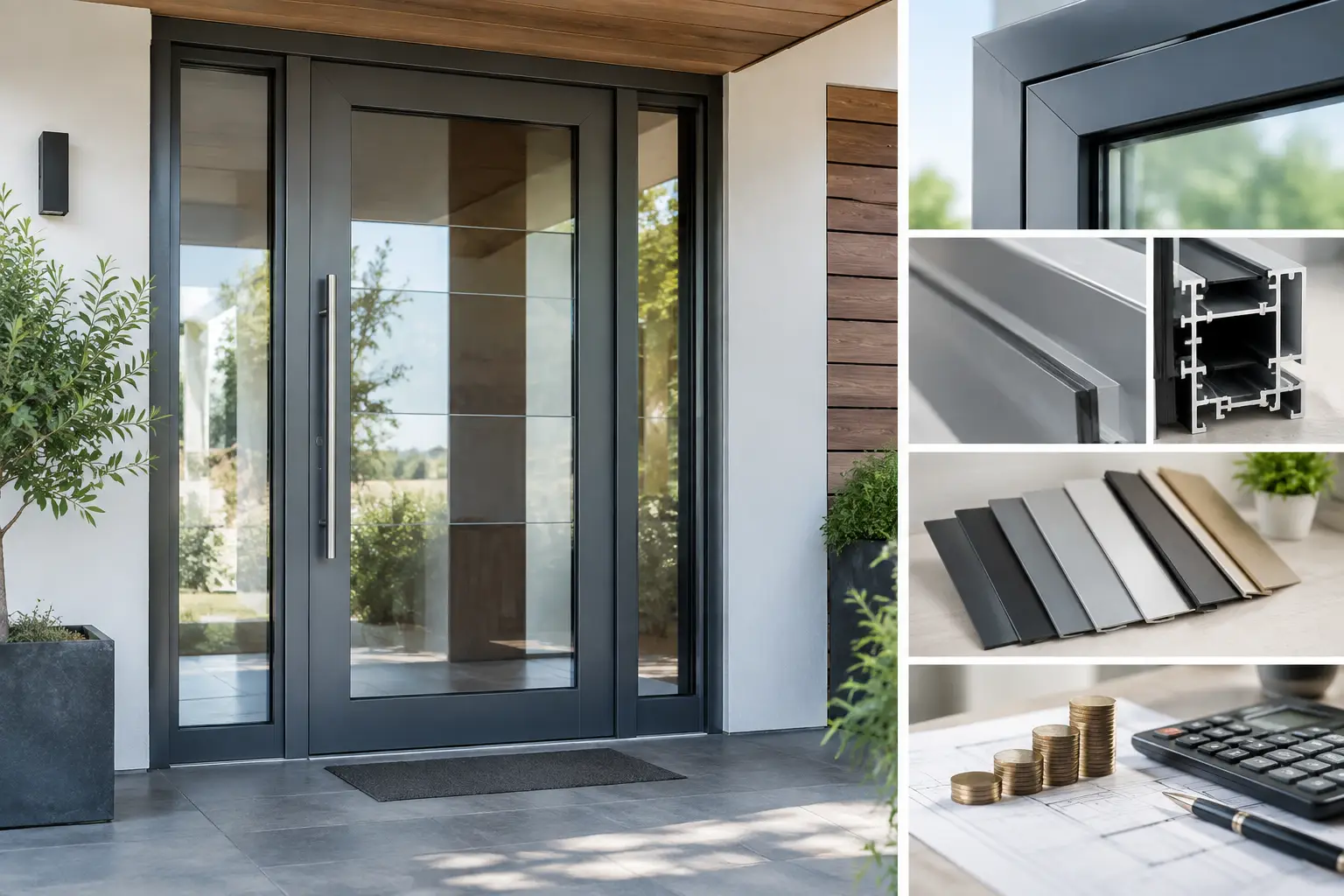
Aluminium Door Design Price: What Affects It?
A front door can be the smallest elevation in a renovation project, yet one of the most visible design decisions. The aluminium door design price is therefore rarely based on a single catalogue figure. It reflects the exact proportions, finish, glazing, security specification and installation requirements needed to create an entrance that belongs to your property.
For a standard-sized aluminium front door, prices in the UK may begin at the lower end of the premium door market. A fully bespoke entrance with sidelights, specialist finishes, decorative glazing and high-security hardware will naturally cost more. The most useful comparison is not simply door against door, but specification against specification – including what is supplied, how it performs and how long it is designed to last.
What determines an aluminium door design price?
Aluminium entrance doors are made to order rather than selected from a limited range of stock sizes. This gives homeowners far greater freedom, but it also means the final price follows the chosen specification.
The door slab and frame are the starting point. Larger openings require more material, more substantial fabrication and, in some cases, additional reinforcement. A single front door will generally be less costly than a wide pivot-style entrance, a double-door arrangement or a configuration with fixed side panels. That does not make a larger design poor value; it simply reflects the scale of the architectural feature being created.
Design complexity also matters. A clean, contemporary panelled door in a standard colour is comparatively straightforward to manufacture. A door with routed detailing, glazed apertures, matching side screens or carefully aligned horizontal features requires more precision in both design and fabrication. For period properties, traditional styling can introduce its own considerations, particularly where the door needs to sit comfortably alongside existing brickwork, glazing bars or architectural details.
Size, configuration and glazing
A front door is often priced as part of a complete entrance system. Looking only at the central leaf can lead to an incomplete comparison.
A single door within a standard opening is the simplest configuration. Add a narrow glazed sidelight and the entrance becomes brighter and more imposing, but the frame, glass and fabrication requirements increase. Double entrance doors create a generous opening for larger homes and renovations, while a door with two sidelights can make a relatively ordinary façade feel carefully considered and balanced.
Glazing has a similar effect on both appearance and cost. Clear glass is often the most economical choice, while obscure, textured, decorative or privacy glazing can increase the price. Larger glazed areas may also require a more considered thermal and security specification. The right option depends on the position of the property: a sheltered entrance with a private driveway calls for a different balance than a street-facing door where privacy is a priority.
Finish is more than a colour choice
The surface finish is one of the clearest ways to make an aluminium door personal to the home. Standard powder-coated colours can offer an excellent, durable result. Bespoke RAL colours, dual-colour finishes and more distinctive effects will usually add to the cost because they involve additional material selection and production control.
This is particularly relevant when choosing an oxide-effect or timber-effect finish. These finishes allow homeowners to introduce the warmth of natural timber or the character of aged metal without taking on the regular painting, staining or weathering associated with traditional materials. Their visual depth and specialist application make them a premium choice, but they can be a sensible long-term investment for a prominent entrance.
It is worth considering the whole exterior palette before selecting a finish. The front door should work with window frames, brickwork, render, roof tiles and external lighting. Choosing the least expensive colour only to find it clashes with the finished property is rarely a saving.
Security and thermal performance should be specified clearly
Not every quoted aluminium door is built to the same standard. This is why an unusually low price deserves careful scrutiny.
A high-quality entrance door should combine a reinforced construction with dependable multi-point locking, security cylinders and carefully engineered hinges. PAS24 testing and Secured by Design accreditation provide useful reassurance that a door has been assessed against recognised security requirements. These features have a cost, but they are fundamental to the role of a front door rather than optional extras to remove without thought.
Thermal performance also influences the aluminium door design price. Well-designed aluminium systems use thermal breaks within the profile and insulated door panels to reduce heat transfer. U-values from 1.0 W/m²K can support a more comfortable entrance area and help limit heat loss, particularly in homes where the hall sits directly behind the door.
The cheapest initial quote may not represent the best value if it compromises on the qualities homeowners live with every day: warmth, closing action, weather resistance, security and the confidence that the door will continue to look right after years of use.
Hardware and detailing can change the final figure
Handles, letterplates, knockers, access control and glazing details give an entrance its finished character. They also vary substantially in price and quality.
A simple handle may suit a restrained contemporary door, while a long pull bar can make a tall door appear more architectural. Satin, black, stainless steel and bronze-toned hardware each create a different effect. Smart locking or keypad access can add everyday convenience, especially for busy family homes or properties used by several occupants, but should be selected for practical reasons as well as novelty.
Small decisions should be made together. A black handle, black external lighting and dark window frames can create a coherent façade. Equally, a timber-effect door paired with a warm metallic handle may bring a softer, more natural quality to a modern extension. Bespoke design works best when these details are considered as part of one composition.
Supply-only and fitted prices are not the same
When comparing quotations, first establish whether the figure is for supply only or includes survey, delivery, removal of the existing door and installation. A supply-only door may appear more affordable, but the project will still need competent fitting, finishing and responsibility for site measurements.
Installation costs vary according to access, the condition of the opening and the amount of preparation required. Replacing a door in a sound, standard opening is relatively straightforward. Altering masonry, installing a new lintel, enlarging an aperture or coordinating the door with new cladding and flooring adds labour and can affect the programme of wider building works.
For trade customers, accurate sizes, clear drawings and early agreement on handing, threshold detail and glazing specification help avoid delays and unexpected costs. For homeowners, a detailed quotation is the best protection against assumptions made at the outset.
How to compare aluminium door quotations fairly
A meaningful quote should make it easy to see what you are buying. Before making a decision, check the door and frame dimensions, the finish on both sides, glass type, handle and hardware, locking specification, threshold, thermal performance, security credentials, lead time, delivery arrangements and whether fitting is included.
Also ask whether the price covers a made-to-measure product. A door adjusted to suit an existing opening is different from a fully precision-manufactured entrance designed around your exact dimensions and preferred configuration. British in-house manufacture can be particularly valuable here, allowing greater control over quality, communication and the final specification.
Rhino Aluminium produces bespoke entrance doors from its factory in Broadstairs, Kent, with designs tailored around the property rather than restricted to standard sizes. That approach is intended to give customers clarity on the specification behind the price, from distinctive finishes and glazing through to security and thermal performance.
Setting a realistic budget for a bespoke entrance
Rather than starting with a fixed price and attempting to remove features, begin with the function the entrance needs to fulfil. Consider the opening size, desired level of privacy, amount of natural light, architectural style and the performance expected from the door. This will quickly establish whether a simple single-door design is appropriate or whether sidelights, decorative glazing and premium hardware are worthwhile additions.
A bespoke aluminium front door is a long-term part of the home, not a finish likely to be changed every few years. Spending carefully on the elements seen and used every day – the proportions, finish, security and fitting quality – usually creates a result that feels considered from the first approach to the house and for many years afterwards.