

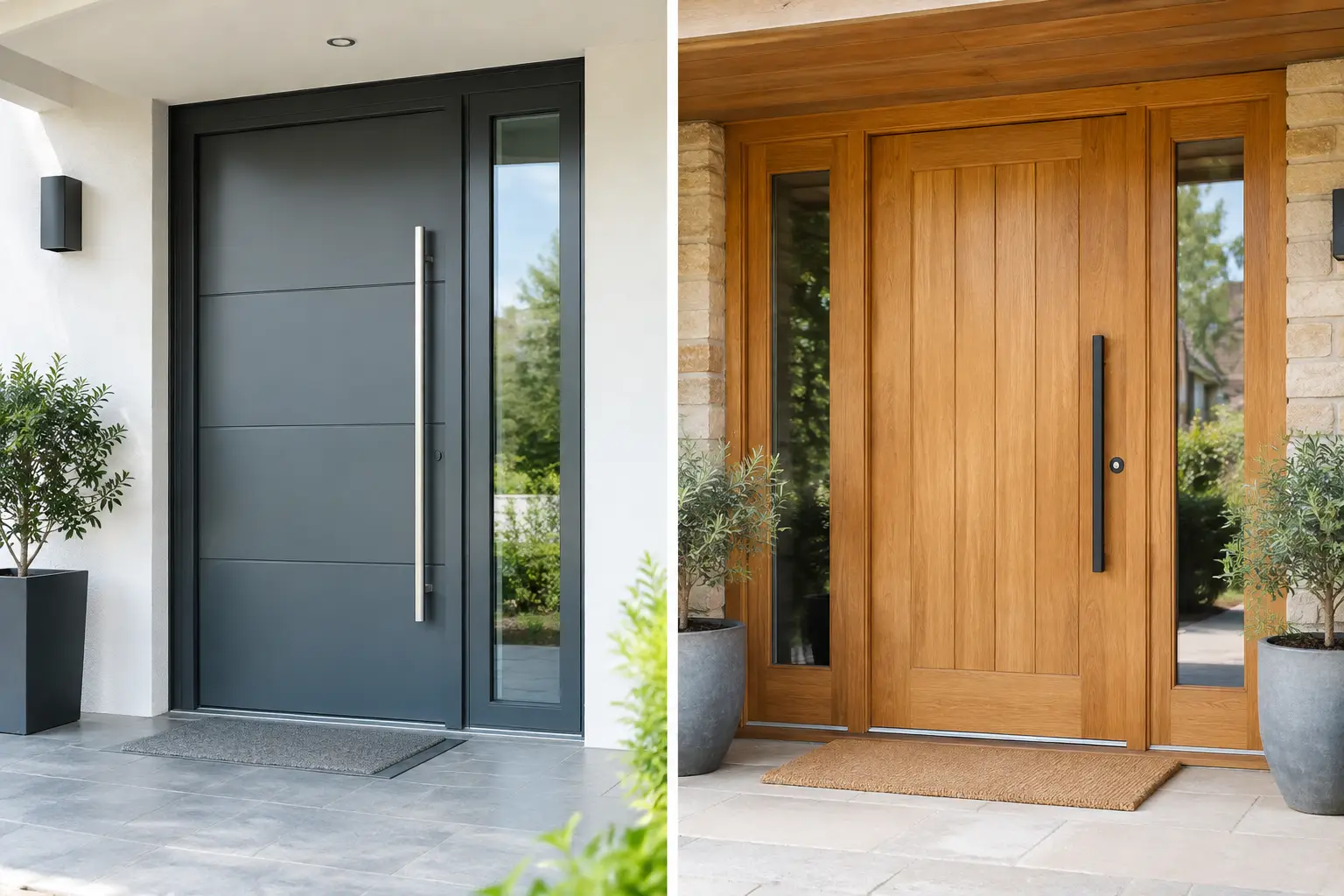
Aluminium Versus Timber Front Doors Compared
The choice between aluminium versus timber is rarely just about choosing a material. Your front door sets the tone before anyone steps inside, but it also needs to keep out rain, retain warmth and provide dependable security every day. For a period cottage, a timber door may feel like the obvious architectural fit. For a crisp new extension or contemporary self-build, aluminium can provide the cleaner lines and greater design freedom the property calls for.
The right decision comes down to the character of the home, the level of maintenance you are prepared to undertake and the performance you expect over the years ahead. Both materials can create a handsome entrance. Their differences become clearer once they are assessed beyond first impressions.
Aluminium versus timber: the visual difference
Timber has an authenticity that cannot be dismissed. Its grain, warmth and subtle variation suit traditional houses particularly well, from Georgian townhouses to country properties. A well-made painted or stained timber door can feel substantial and full of character, while detailed mouldings can complement original joinery and heritage features.
Aluminium offers a different kind of refinement. It allows for precise, slim profiles, larger glazed areas and sharp contemporary geometry that would be difficult to achieve in wood. It can suit modern architecture beautifully, whether specified in a restrained anthracite grey, a bold bespoke colour or a textured oxide-style finish.
This does not mean a homeowner must choose between a contemporary door and the appearance of timber. Timber-effect aluminium finishes bring the visual depth of natural wood to an engineered aluminium entrance door. They are particularly effective where a property needs the warmth of a traditional material but the owner wants a more stable, lower-maintenance solution. A timber-effect door can also create a considered bridge between an older house and a modern rear or side extension.
Matching the door to the property
The material should support the architecture rather than compete with it. A beautifully detailed timber door can be the right answer for a listed property or one with strict conservation requirements, subject to local planning guidance. Aluminium is often the more flexible choice for homes where the entrance incorporates sidelights, fanlights, full-height glazing or double doors.
Because aluminium is precision manufactured, it is well suited to made-to-measure openings and highly individual specifications. The arrangement of panels, glazing, handles and hardware can be selected to create an entrance that looks designed for the house rather than chosen from a standard range.
Maintenance and weather resistance
This is where the practical distinction between aluminium and timber is most apparent. Timber is a natural material and responds to changes in moisture, temperature and sunlight. Even high-quality hardwood doors require regular care. Depending on exposure, the finish may need cleaning, inspecting and recoating to prevent peeling paint, fading, swelling or water ingress.
A sheltered entrance will place fewer demands on a timber door than a south-facing or coastal setting. In exposed parts of the UK, driving rain and salt-laden air can accelerate wear. Neglect does not always lead to immediate failure, but small cracks in a painted surface can allow moisture into the timber and turn a straightforward maintenance task into a more involved repair.
Aluminium does not rot, warp or swell in the same way. A quality powder-coated or specialist finish is designed for long-term external use and generally needs only occasional cleaning with mild soapy water and a soft cloth. This makes it a practical option for busy households and properties with little protection from the weather.
Low maintenance should not be confused with no maintenance. Hinges, seals, drainage routes and locking components should still be checked periodically, whatever the door material. However, aluminium removes much of the cyclical sanding, repainting and refinishing associated with timber.
Thermal performance: material is only part of the answer
A front door must do more than look substantial. It should help prevent heat loss and reduce cold spots around the entrance. Modern timber is naturally insulating, which remains one of its strongest performance qualities. The final result, however, depends on door thickness, construction, seals, glazing and installation as much as the timber itself.
Aluminium conducts heat, so older aluminium doors could feel cold and perform poorly. Modern premium aluminium entrance doors are engineered differently. Thermal breaks separate the interior and exterior sections of the frame and sash, reducing heat transfer. Combined with insulated panels, high-performance glazing and carefully designed seals, aluminium doors can achieve strong thermal results, including U-values from 1.0 W/m²K on suitable specifications.
When comparing quotations, ask for the U-value of the complete door set, not a figure for a panel or glazing unit in isolation. Also consider the threshold, frame, side panels and installation detail. A high-performing door can be undermined by poorly finished junctions or an ill-suited installation.
Security and everyday reassurance
Material alone does not make a front door secure. Construction, lock specification, hinges, cylinder protection, glazing and fitting quality matter far more than a simple timber-versus-aluminium label.
A solid engineered timber door can provide a secure entrance when specified with appropriate locking and reinforced hardware. Yet timber can be more vulnerable to changes in alignment if it has been affected by damp or seasonal movement. A door that sticks, drops or no longer closes cleanly may place additional strain on locks and seals.
Aluminium provides excellent dimensional stability, helping the door and frame maintain accurate alignment. Premium aluminium door systems can incorporate reinforced construction, multi-point locking, security glazing and tested configurations built to recognised standards such as PAS24. For homeowners seeking additional confidence, Secured by Design accreditation provides useful reassurance that security has been considered at system level.
For either material, avoid assessing security by weight alone. A very heavy door may feel impressive, but it is the complete engineered system that matters when it comes to resisting forced entry and continuing to operate reliably.
Cost, lifespan and value over time
The purchase price of a bespoke aluminium or quality timber front door will be higher than a basic off-the-shelf replacement. That initial investment reflects the door’s construction, security specification, finish, made-to-measure manufacture and installation requirements.
Timber prices vary considerably by species, joinery method and finish. Softwood options may offer a lower entry price but usually demand more diligent maintenance. Hardwood doors can be durable and beautiful, although they can carry a substantial cost and still require protection from the elements.
Aluminium often represents higher initial expenditure than a standard timber door, particularly where bespoke glazing, side panels or specialist finishes are involved. Its value lies in precision, stability and reduced upkeep. Over a long ownership period, avoiding repeated redecorating and potential weather-related repairs can change the overall cost picture.
There is also a visual value to consider. A well-specified entrance can materially improve kerb appeal, particularly on a renovation or self-build where the doorway is a focal point. The aim should not be to choose the cheapest material, but to choose the door that will continue to look appropriate and perform properly for the life you expect from it.
Sustainability requires a closer look
Timber is renewable when responsibly sourced, and its natural credentials are a major reason many homeowners favour it. It can also be repaired locally, which may extend its useful life. The qualification is maintenance: a door that deteriorates prematurely or requires frequent coatings and replacement components has a different environmental story from one that is carefully maintained for decades.
Aluminium requires significant energy to produce, but it is highly durable and widely recyclable. A long service life, low maintenance requirements and the ability to recycle aluminium at the end of its use all matter when considering its overall impact. There is no universal winner without looking at sourcing, lifespan, finish durability and how long the door is likely to remain in place.
Which front door is right for you?
Choose timber where authentic natural material, traditional detailing and heritage character are the priority, and where you are willing to commit to its maintenance. Choose aluminium where you want architectural precision, broad colour and configuration options, strong weather resistance and high security performance with less ongoing care.
For many homeowners, the most persuasive compromise is timber-effect aluminium. It delivers the familiar warmth of wood grain while retaining the engineered performance and stable construction of aluminium. Rhino Aluminium’s Naturale finishes are designed for exactly this kind of decision: a distinctive entrance that respects the character of the home without asking for the maintenance routine of a natural timber door.
Before selecting a finish, consider how the entrance is used on an ordinary wet Tuesday, not only how it will appear in a brochure. A door that complements the house, closes precisely, keeps the hall comfortable and gives you confidence when you turn the key is a choice you will appreciate every day.