

Choosing Secured by Design Front Doors Well
A front door is the point at which a home feels most exposed. It is also the first architectural detail visitors notice. Secured by Design front doors are designed to answer both considerations at once: providing independently assessed protection against common methods of forced entry while allowing the entrance to retain its own character.
For a renovation, new build or considered extension, that balance matters. Security should not force a choice between a plain, standard-looking door and a design-led entrance. The right aluminium door can be precision manufactured around the opening, specified in a distinctive finish and engineered to meet demanding security criteria.
What Secured by Design means for a front door
Secured by Design is the police security initiative that encourages products and building practices proven to reduce the opportunity for crime. It is not simply a phrase applied to a door because it has a good lock. A product carrying Secured by Design accreditation must meet the scheme’s requirements, which include evidence of independent testing to recognised security standards.
For external doors, PAS 24 is commonly central to that evidence. This British Standard assesses how a doorset performs against methods of attack likely to be used by an opportunist intruder, including attempts to force, manipulate or damage vulnerable areas of the door, frame, lock and hardware.
The key word is doorset. Security is not defined by the door slab alone. The frame, hinges, locking points, glazing, handle and cylinder all play a part in how an entrance performs. A premium front door should be specified as a complete, compatible system, rather than assembled from individually impressive components that have not been tested together.
Why aluminium is a strong foundation
Aluminium gives a security-focused entrance a naturally capable starting point. It is a strong, stable material that can accommodate reinforced sections, secure hardware and substantial multi-point locking without the movement and maintenance demands associated with some alternatives.
Its rigidity is especially valuable on larger entrance designs. A wide door with a side panel, a tall glazed feature or a double-door arrangement needs to remain accurately aligned over years of daily use. Good engineering helps the locks engage as intended, weather seals sit correctly and the overall entrance continues to feel solid when it closes.
That does not mean every aluminium door is automatically equal. Profile design, reinforcement, fabrication quality and the tested specification are what turn a strong material into a high-performing doorset. Ask whether the exact style and configuration under consideration is covered by the relevant certification, particularly if you are adding glazing, sidelights or non-standard hardware.
Security details worth specifying
A Secured by Design entrance is built around layers of protection. Multi-point locking secures the door at several points along its height, rather than relying on a single central lock. This helps distribute force across the frame and makes it more difficult to prise the opening apart.
The cylinder also deserves close attention. It is the component most homeowners use every day, yet its security classification and compatibility with the handle are easy to overlook. A tested, security-rated cylinder and protective external handle arrangement help defend against common forms of lock attack.
Hinges matter just as much, particularly on outward-opening or contemporary pivot-style designs. Security hinges or hinge-side protection prevent the hinge edge becoming the weak point. Reinforced corners, strong internal construction and carefully fitted panels complete the picture.
Glazing should be considered as a security component, not only a design choice. Decorative obscured glass can preserve privacy while introducing daylight, while laminated or security glass can be appropriate for configurations that require enhanced resistance. The correct specification depends on the size, location and purpose of the glazed section, so it should be selected as part of the doorset rather than as an afterthought.
Design freedom without the compromise
The misconception that high-security doors must look heavy or utilitarian is outdated. Contemporary aluminium allows clean lines, flush detailing and generous proportions, whether the property calls for a dark architectural finish, a softer heritage colour or a statement oxide-effect surface.
Timber-effect finishes are particularly useful where a home needs the warmth of natural grain but the owner would rather avoid regular sanding, staining and repainting. Oxide-effect finishes can create a more industrial, aged-metal appearance that suits modern extensions and distinctive self-build projects. Both offer a considered alternative to the familiar painted front door.
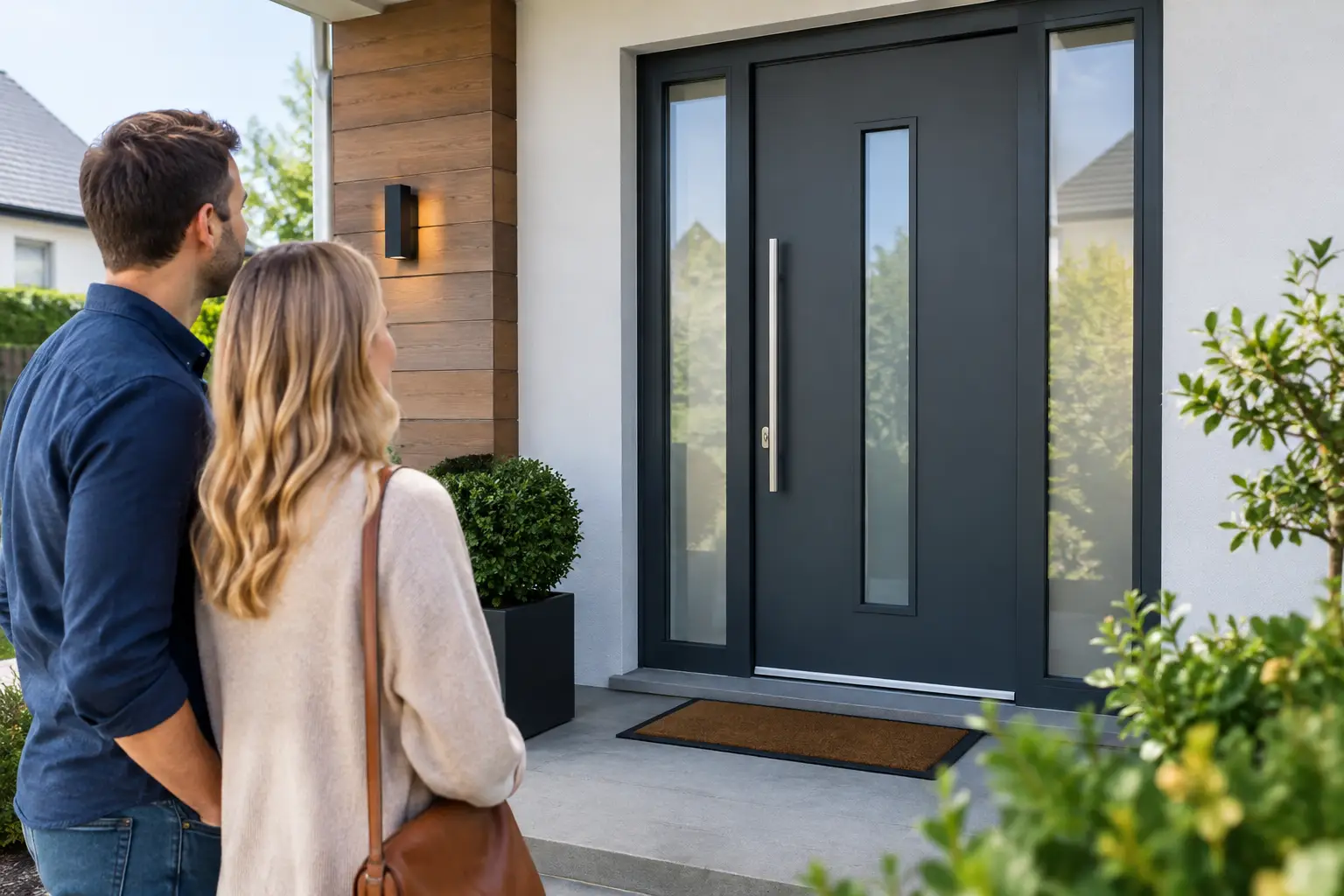
Security-led design also extends to the practical layout. A slim glazed panel may bring daylight into a dark hall without revealing too much of the interior. A side panel can make a wide entrance feel welcoming, although it must be incorporated within the tested system. Double front doors create presence and convenience, but they require careful attention to the inactive leaf, meeting stile and locking arrangement.
The best result comes from resolving appearance and performance together at the start. Choosing the door style first and trying to add security later can restrict options unnecessarily. A specialist manufacturer can guide the entire specification around the opening, the property’s architecture and the required performance level.
Do not overlook installation
Even a PAS 24-tested, Secured by Design accredited product can only perform as intended when correctly installed. The surrounding structure must be sound, the frame must be fixed securely and the door must be adjusted accurately so that every locking point engages fully.
This is particularly relevant in older properties, where openings may be out of square, and in renovation projects where new render, insulation or flooring changes the finished dimensions. Made-to-measure manufacture allows the doorset to be built for the actual opening, rather than relying on packing out a standard size. It produces a neater architectural finish and supports proper operation.
Installation should also consider the threshold. A low threshold can improve access and create a refined transition from outside to inside, but it still needs to manage weather exposure effectively. The suitability of a particular threshold depends on the location, shelter provided by a porch or canopy, drainage and site levels.
Security, warmth and weather resistance work together
Homeowners are right to expect more than security from a premium entrance. The front door must also keep out draughts, rain and unnecessary heat loss. Thermal performance is influenced by the aluminium profile, insulating core, glazing and installation detail, not simply by the thickness of the panel.
For many projects, a U-value from 1.0 W/m²K provides strong thermal performance while retaining the design possibilities of aluminium. However, the most suitable target will depend on the wider building design, current Building Regulations requirements and whether the work forms part of an extension or replacement project.
A tightly engineered doorset also contributes to everyday comfort. When seals, locks and frame tolerances are working together, the door closes with reassuring precision, resists wind-driven rain and avoids the rattles or draughts that can make an otherwise attractive entrance disappointing to live with.
Questions to ask before ordering
When comparing Secured by Design front doors, ask for clarity rather than broad assurances. Confirm that the proposed configuration is covered by certification, establish which lock and hardware package is included, and check how glazing and side panels affect the tested specification. It is sensible to ask about the expected U-value for your chosen design and the installation approach for the existing opening.
For homeowners, there is also a value question. A cheaper door may look similar in a photograph, but it may not offer the same reinforcement, tested hardware, tailored fabrication or long-term finish quality. For trade professionals, consistency is equally valuable: dependable manufacturing dimensions, clear specification support and a supplier able to deliver a complex bespoke doorset correctly.
Rhino Aluminium manufactures bespoke aluminium entrance doors in Broadstairs, Kent, combining refined design with PAS 24-tested performance and Secured by Design accreditation. Each door can be configured around the property rather than forced into a standard template.
Your entrance should feel personal when you arrive home, not like a compromise made for security. Start with the architecture, specify the tested performance required, and let both inform a front door built to protect the home behind it.