

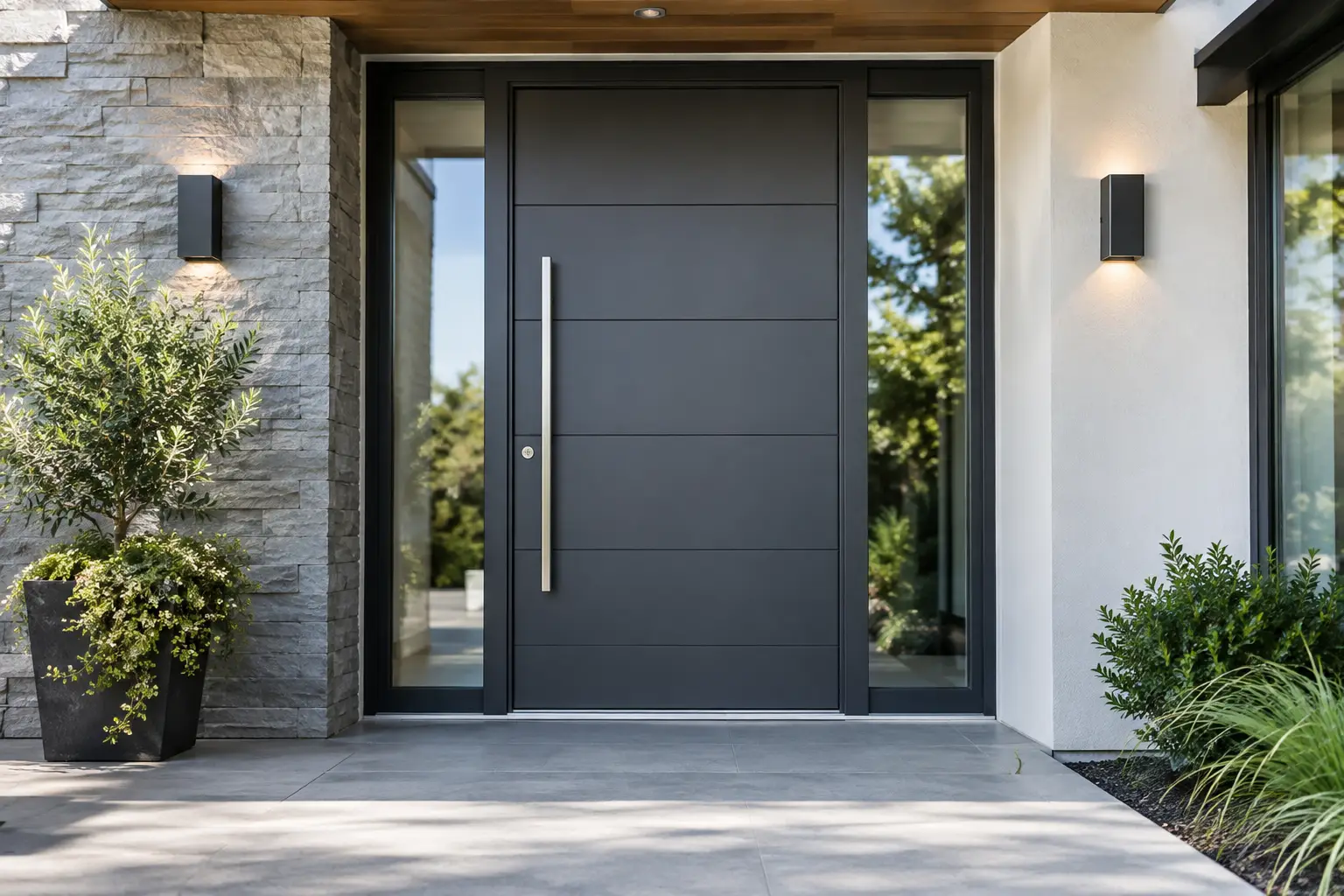
Modern Aluminium Front Door Designs That Last
A front door is the one part of a home that every visitor encounters at close range. Its proportions, finish, glazing and hardware all shape that first impression before anyone steps inside. The strongest modern aluminium front door designs do more than follow a trend: they give a property a clear architectural identity while delivering the security, insulation and weather resistance expected from a long-term investment.
For a period renovation, a sharp-edged new extension or a full self-build, aluminium offers design freedom that is difficult to achieve with standard door materials. The key is choosing a design that belongs to the building, not simply one that looks striking in a showroom.
What defines modern aluminium front door designs?
Contemporary entrance doors are usually defined by confident geometry, refined detailing and carefully controlled contrast. A broad, uninterrupted door leaf can make a compact frontage feel more considered, while slim glazed apertures introduce light without reducing privacy. Flush surfaces, linear grooves and precisely positioned handles lend a calm, architectural quality.
Aluminium is particularly suited to this approach. Its inherent strength allows for substantial door sizes and crisp profiles without the bulk often associated with traditional materials. That makes it possible to specify a tall single door, an elegant pair of double doors or a door with matching side panels that frames the entrance as one complete composition.
Modern does not have to mean stark. A charcoal-grey door with a discreet glazed panel may suit a Victorian bay-fronted home as effectively as a minimalist new build. Equally, a warm timber-effect finish can soften a contemporary façade without bringing the regular staining, swelling or fading associated with natural timber.
Start with the architecture, not the colour chart
The best starting point is the elevation of the house. Look at the dominant materials around the entrance: brick, render, stone, cladding, window frames and roofline. The door should create a focal point, but it should also make these surrounding elements feel intentional.
A clean-lined property can carry a wide pivot-style appearance, full-height glazing or a deep oxide-effect finish. On a more traditional home, a modern aluminium door with restrained panel detailing, a timber-effect surface or satin hardware can preserve character while bringing the entrance up to date. It depends on whether the aim is respectful contrast or a closer visual match.
Scale matters just as much as style. A narrow door can look lost beside wide windows or a generous porch, while an oversized design may overwhelm a modest entrance. Side panels are often the answer where more light or visual width is needed. They can be glazed, solid or a combination of both, allowing the doorway to be tailored to the proportions of the opening.
Consider the sightline from inside
Front doors are frequently chosen from the pavement looking in, yet the view from the hallway is equally significant. A glazed panel can brighten a dark entrance hall, but the glass specification must suit the level of privacy required. Obscured, textured or decorative glazing allows daylight through while limiting views into the home.
If the hall already receives plenty of natural light, a solid statement door may provide a stronger result. In this setting, the finish, handle and panel pattern become the principal design features.
Choose a finish with lasting character
Colour remains one of the most visible decisions, but contemporary aluminium offers more than a choice between black, grey and white. Powder-coated finishes provide a durable, low-maintenance surface across a broad palette, from understated neutrals to expressive shades that set the entrance apart.
Deep blacks and anthracite greys work well with aluminium windows and modern brickwork, particularly where a coordinated exterior is the goal. Softer greys, muted greens and off-whites can bring a more relaxed character to rendered or rural homes. A bespoke colour is worthwhile when the door needs to relate precisely to existing joinery, cladding or architectural details.
For homeowners seeking a more distinctive surface, oxide-effect finishes introduce depth and variation reminiscent of aged metal. They can give a newly built property a more established feel, or provide a compelling contrast against pale render and clean masonry. Timber-effect aluminium offers another route: the warmth and grain of wood, paired with the stability and straightforward upkeep of aluminium.
These finishes are not interchangeable. An oxide effect is deliberately expressive and suits a door intended to be a focal point. A timber effect is often more sympathetic where the property needs warmth or where neighbouring homes follow a traditional vernacular. Sampling finishes against the actual external materials is always more reliable than choosing from a screen image alone.
Glazing should serve the entrance
Glazing has a practical role, but it also sets the rhythm of the design. A narrow vertical vision panel can accentuate height. A horizontal aperture can echo the lines of a contemporary extension. Symmetrical glazed inserts create formality, while an offset panel can make the door feel more individual.
The trade-off is privacy. Clear glazing may be ideal where the property is set back from the road or faces a private approach. On a busy street, obscured glass is usually the more comfortable choice. It brings daylight into the hall without making the interior feel exposed.
Glazing also needs to be considered alongside security and thermal performance. A premium entrance door should use appropriately specified safety glazing within a properly engineered system, not treat glass as a purely decorative addition.
Detail the hardware with the same care
Handles are often the point of physical contact that makes a door feel genuinely premium. A long pull bar reinforces the vertical scale of a tall contemporary door, while a shorter bar or lever handle can suit a more restrained design. Black, stainless steel and brushed metallic finishes each create a different effect, particularly against timber-look or oxide-effect surfaces.
Avoid selecting hardware in isolation. Consider the letterplate, house numbers, exterior lighting and nearby window furniture. Matching every element is not essential, but a coherent finish palette gives the entrance a more resolved appearance.
Practical use should guide the final choice. A large pull handle makes a visual statement, yet the door still needs a locking arrangement that is convenient for everyday family life. Discuss access requirements early if keyless entry, thumbturn cylinders or particular locking preferences are important.
Performance is part of the design brief
A beautiful entrance should never ask a homeowner to compromise on reassurance. The door assembly, frame, lock, hinges and glazing work together, so look beyond decorative appearance when comparing specifications.
PAS24 testing provides evidence that a door has been assessed against methods of attack used in opportunistic burglary. Secured by Design accreditation offers further confidence that the product aligns with police-preferred security principles. Multi-point locking and reinforced construction should be integral to the specification rather than optional additions.
Thermal performance is equally relevant. A well-engineered aluminium front door with a thermally broken profile can achieve U-values from 1.0 W/m²K, helping to reduce heat loss at a part of the home that is opened and closed every day. Exact performance will depend on the chosen design, glazing and size, so it is worth confirming the figures for the final configuration rather than relying on a generic claim.
Weather resistance deserves the same attention, especially on exposed coastal sites or elevations facing prevailing rain. Precision manufacturing, correctly fitted seals and a carefully surveyed installation all affect how the door performs through changing seasons.
Why made-to-measure makes the difference
Standard replacement doors are designed around standard openings. They can be a practical choice for straightforward projects, but they rarely offer the proportion, finish and configuration needed to make an entrance feel truly integrated with the home.
A made-to-measure aluminium door allows the frame, leaf size, side panels, glazing, colour and hardware to be specified as a single design. This is especially valuable in older properties with unusual reveals, in extensions where the opening has been designed around the door, or where a pair of double doors needs to align precisely with the rest of the façade.
British in-house manufacture also brings greater control over specification. Rhino Aluminium precision manufactures bespoke entrance doors from its Broadstairs, Kent factory, combining refined design choices with engineered performance for homeowners and trade professionals alike.
Before settling on a design, stand back from the entrance and ask one simple question: does this door make the whole property feel more considered? When the answer is yes, the right finish, glazing and specification have usually found their place.