

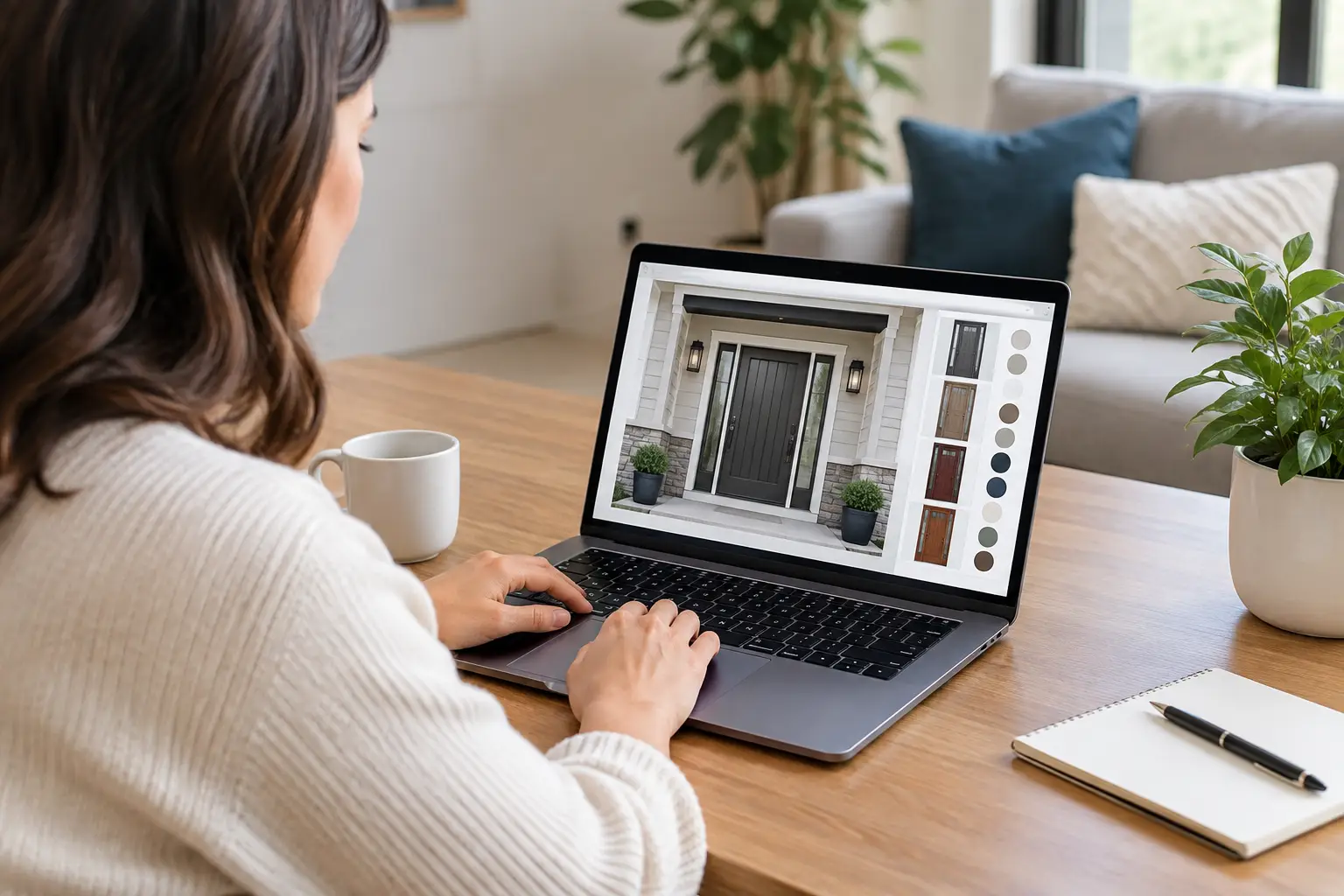
How an Online Front Door Design Tool Helps
A front door can look entirely different once it is viewed against your own brickwork, render, glazing and roofline. An online front door design tool gives you a practical place to test those decisions before committing to a made-to-measure aluminium entrance. Rather than choosing from a small sample in isolation, you can start building an entrance that belongs to the architecture of your home.
For a renovation, extension or self-build, that early visual confidence matters. The door is often the first finished element visitors notice, yet it also needs to meet demanding expectations for security, warmth and day-to-day reliability. A well-designed configurator helps bring these requirements together, without reducing a bespoke product to a one-size-fits-all purchase.
What an online front door design tool should help you decide
The best design tools do more than show a selection of colours. They guide you through the visible choices that define an entrance, then give those choices a useful context. You should be able to consider the door style, configuration, finish, glazing and hardware as parts of a complete elevation rather than separate details.
Start with the proportion of the opening. A single door may suit a traditional terrace or compact porch, while a wider contemporary frontage may call for a side panel, glazed surround or double entrance doors. These choices affect the amount of natural light in the hallway and the overall balance of the façade. They also influence how the door will be used, particularly where a household regularly brings in prams, bicycles or furniture.
The tool should then make it easier to compare design directions. A clean, contemporary aluminium door can create a precise architectural focal point. Traditional detailing may be more appropriate for a period property, particularly when the proportions of the existing windows and porch are retained. Timber-effect and oxide-effect finishes offer another route: the texture and visual character of aged metal or natural timber, with the stability and lower maintenance demands of aluminium.
Digital design is particularly useful when the choice is not obvious. A dark finish can give a pale rendered home definition, but may feel too severe against deep red brick. A warmer timber-effect door can soften a modern extension, whereas an oxide-effect finish can make an intentional statement on an industrial-inspired project. Seeing configurations side by side helps move the decision beyond a swatch held in changing daylight.
Design the whole entrance, not only the door leaf
A premium entrance is a composition. The door leaf matters, but so do the frame, side panels, glass and hardware. An online front door design tool should encourage you to assess these components together.
Glazing is a good example. A solid door offers maximum privacy and a bold, uninterrupted finish. Glazed sections can brighten a dark hall and introduce another layer of detail, whether you prefer restrained linear apertures or more generous panels of decorative glass. The right option depends on the orientation of the property, the privacy of the approach and the character of the home. A door that faces a busy pavement has different requirements from one set back behind a private drive.
Handles deserve the same care. A long pull bar can complement a broad, minimalist aluminium door, while a more traditional handle may sit naturally with heritage-inspired detailing. Consider how the hardware relates to nearby exterior elements such as lighting, house numbers, railings and garage doors. Matching every finish is not essential, but the materials should look deliberate rather than incidental.
Colour requires a similarly considered approach. Anthracite and black remain popular because they offer crisp contrast and work confidently with many property styles. However, bespoke colours can be the stronger choice when a home has distinctive brick, stone, cladding or window frames. Use the digital tool to narrow the direction, then confirm the final finish with samples where available. Screen settings, weather and the scale of the door can all change how a colour is perceived.
Keep performance in the design conversation
Visual freedom should not distract from what sits beneath the finish. An entrance door is part of the thermal and security envelope of the home, so performance credentials should carry as much weight as appearance.
For security, look for a construction designed around reinforced sections, quality hardware and multi-point locking. PAS24 testing and Secured by Design accreditation provide useful reassurance that a door system has been assessed against recognised security requirements. The exact specification still matters, especially where glazing, sidelights or particular locking options are involved, so it is sensible to discuss the final configuration before placing an order.
Thermal performance is equally relevant. Aluminium has the strength needed for slim, precise-looking profiles, while modern thermally broken systems can deliver efficient results. U-values from 1.0 W/m²K can help support a more comfortable entrance area and reduce unnecessary heat loss. Your final requirement may depend on the wider project, including whether you are replacing an existing door or working to the standards of a new extension.
Weather resistance is less glamorous but no less valuable. British entrances contend with wind-driven rain, changing temperatures and repeated daily use. A precision manufactured door, properly measured and installed, should feel reassuringly substantial while maintaining dependable operation throughout the year.
Use the tool to prepare for a better quotation
A configurator is an excellent starting point, but it does not replace a detailed survey or professional conversation. Its real value is that it lets you arrive at that conversation with clearer priorities.
Save or note the combination you prefer, including the collection, finish, glazing layout and handle style. Think about the questions a specialist will need answered: Is the opening standard or unusually large? Will the door sit beneath an exposed canopy? Do you need a side panel for daylight? Is there a step, threshold or accessibility consideration? Are you coordinating the entrance with new windows or cladding?
Measurements are especially important. A made-to-measure aluminium entrance should be fabricated to the confirmed dimensions of the opening, not ordered against an assumption. If you are renovating an older property, allow for walls that are not perfectly square and for any changes to flooring, render or external levels. For self-build and extension projects, the door should be considered early enough to coordinate structural openings, insulation details and drainage.
There is also a sensible balance between ambition and budget. Large glazed sections, double doors, specialist finishes and intricate design features can all add impact, but they may alter the final specification and cost. The aim is not to remove those choices. It is to invest in the details that will make the greatest difference to how the entrance looks, feels and performs over time.
From screen choice to a made-to-measure entrance
The digital stage should feel straightforward, even when the product itself is highly specified. Once a preferred design direction is established, the next step is to validate it against the property, performance needs and practical installation requirements.
Rhino Aluminium combines this design freedom with British in-house manufacture from Broadstairs, Kent. Each bespoke door can be developed around the exact opening and chosen configuration, bringing together refined finishes, engineered security and the close attention to detail expected of a premium entrance.
Give yourself permission to compare a few different options before deciding. The strongest choice is usually the one that still looks right after the initial excitement has passed – and that gives you the assurance of lasting security, comfort and craftsmanship every time you come home.