

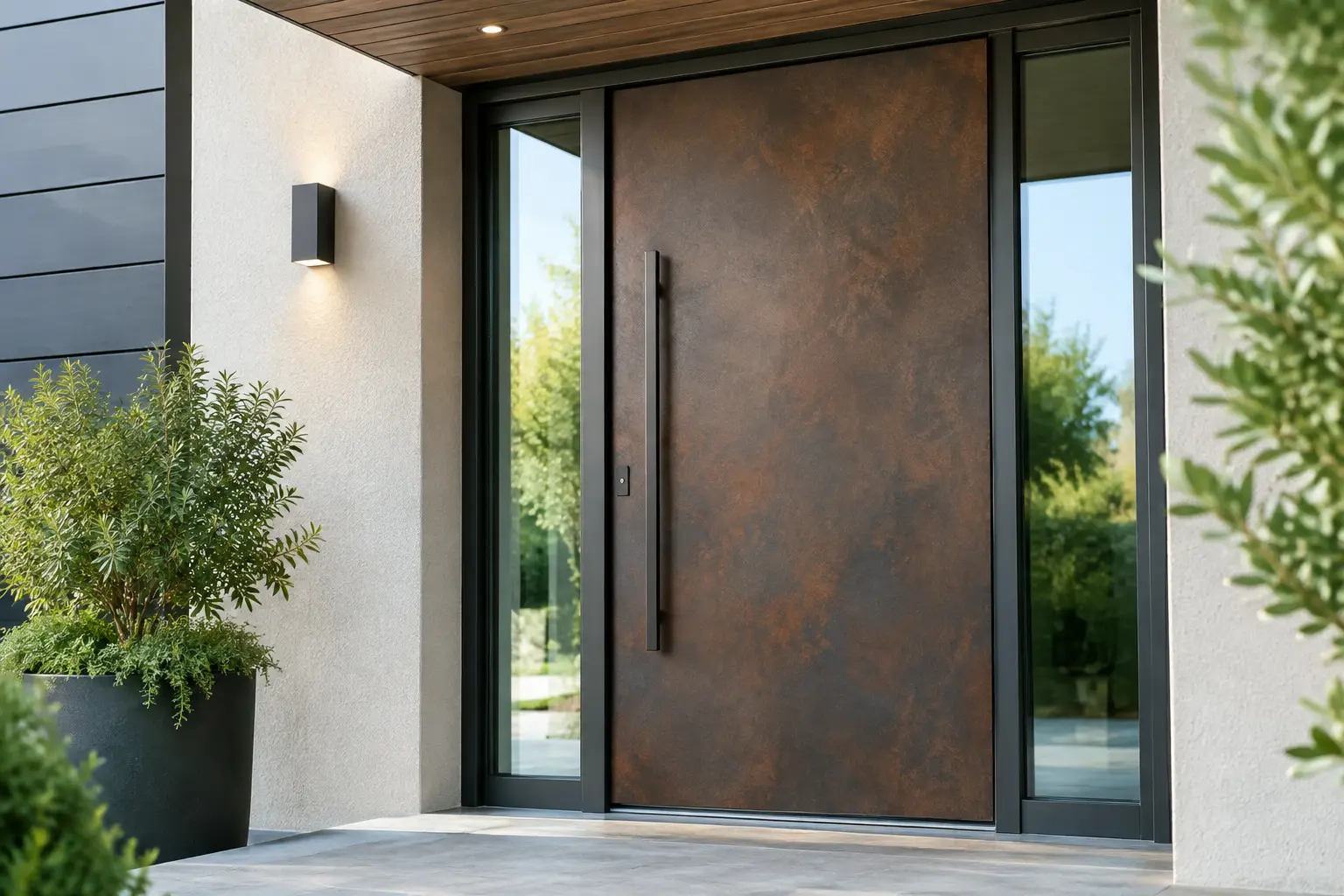
Oxide Effect Aluminium Front Doors That Endure
A front door is often the first material decision visitors notice, yet many entrances are reduced to a safe colour choice and standard hardware. Oxide effect aluminium front doors offer a more considered alternative: the visual depth and patina of weathered metal, paired with the precision, security and low-maintenance benefits of a modern aluminium system. They create a distinct threshold without asking a homeowner to accept the upkeep normally associated with exposed steel or naturally oxidising finishes.
The appeal lies in contrast. An oxide-effect surface brings warmth, variation and an architectural edge to clean-lined aluminium profiles. It can make a contemporary extension feel more grounded, give a converted industrial property a fitting focal point or introduce character to a traditional home without resorting to imitation period detail. The result is expressive, but still refined.
What makes an oxide-effect door different?
Oxide effect is not simply a brown paint finish. It is designed to recreate the layered appearance associated with aged metal – from softened bronze and copper notes to darker, mineral-like tones and subtle changes in texture. A quality finish has visual movement, so it does not read as flat when daylight changes across the entrance.
This distinction matters because a front door occupies a large, highly visible area of the façade. On a home with pale render, brick, stone or black-framed glazing, an oxide finish can provide the depth that a single solid colour may lack. It has enough presence to become a feature, while retaining a material-led quality that feels appropriate beside architectural elements such as cladding, steelwork and large-format glazing.
Unlike genuine corten steel, however, an oxide-effect aluminium door is not intended to continue weathering. There is no rust runoff to stain paving, masonry or rendered walls, and no concern that the desired appearance will eventually compromise the material beneath. The finish is selected for its character, while the door itself is engineered for everyday use.
Oxide effect aluminium front doors for different homes
The strongest designs do not treat the door in isolation. The finish should relate to the scale of the entrance, the surrounding materials and the level of contrast already present on the property.
For a modern self-build or rear extension with expansive glazing, an oxide-effect door can soften the sharper geometry of aluminium frames. A full-height door, a narrow glazed side panel or a double-door arrangement can give the entrance a more architectural proportion, particularly where the hall has generous ceiling height.
On a brick townhouse or a renovated Victorian property, the same finish can work differently. A more traditionally proportioned slab, carefully chosen glazing and restrained hardware may preserve the home’s original rhythm while introducing a contemporary material. It is a useful route for homeowners who want an entrance that feels individual rather than overtly futuristic.
The amount of oxidation effect is also worth considering. Darker finishes tend to appear more formal and pair well with charcoal windows, slate and dark brick. Warmer copper or bronze-led effects can sit comfortably alongside buff brick, natural timber, limestone and planting. Samples should always be viewed against the exterior in natural light where possible. Interior lighting, computer screens and small swatches can all make a finish appear different from its final setting.
Design the full entrance, not just the door slab
A bespoke door allows the entrance to be composed as one complete feature. Side panels can bring more daylight into a hallway and make a narrow opening feel wider. A fanlight may suit a taller existing aperture, while double entrance doors can give a larger property the arrival it deserves. The oxide finish can be carried across these elements for continuity or contrasted with glazed sections to keep the composition lighter.
Glazing deserves just as much consideration as colour. Clear glass can create an open, contemporary appearance where privacy is not a concern. Obscure, textured or decorative glazing gives light without exposing the hallway, and can introduce a more traditional or more sculptural character depending on the design. The right choice often depends on the orientation of the house and how close the entrance is to a pavement, drive or neighbouring property.
Hardware should support the design rather than compete with it. A long pull handle can emphasise height and a minimal architectural style. Lever handles can be better suited to a more conventional format or households that prefer familiar operation. Dark finishes provide definition against an oxide surface, while stainless steel can introduce a crisp contrast. Letterplates, knockers, viewers and numbers should be considered early, so practical requirements do not become afterthoughts.
Performance behind the patina
A distinctive finish should never mean a compromise on the fundamentals. An external door must deal with daily operation, driving rain, wind exposure and the demands of a busy household. Aluminium is particularly well suited to larger, heavier door designs because it provides inherent strength and dimensional stability without the maintenance burden of timber.
Thermal performance is a central part of the specification. A well-engineered aluminium entrance door with insulated construction helps reduce heat loss around one of the most exposed areas of the home. U-values from 1.0 W/m²K are available within high-specification systems, helping homeowners make a design-led choice that also supports comfort and energy efficiency.
Security is equally non-negotiable. Look beyond the appearance of the lock and ask how the complete door assembly performs. Multi-point locking, reinforced construction, high-quality cylinders and secure glazing all contribute to the final result. PAS24 testing and Secured by Design accreditation offer valuable reassurance that the door has been assessed against recognised security standards, rather than simply fitted with impressive-looking hardware.
Weather performance also depends on precise fabrication and installation. Correctly engineered seals, thresholds and drainage details help the entrance resist water ingress and draughts. This is particularly relevant for exposed coastal locations, open rural sites and properties where the doorway receives prevailing wind and rain.
Made to measure is where the design comes together
An oxide finish has the greatest impact when it is part of a door designed specifically for the opening, not applied to a standard-sized product. Made-to-measure manufacture allows proportions to be resolved properly, whether the property needs an unusually tall door, an offset side panel, a double configuration or a replacement for a non-standard existing frame.
It also gives greater control over the smaller decisions that shape the finished entrance: opening direction, threshold type, glazing layout, handle position, internal and external colour combinations, and the relationship between the door and any adjacent windows. These details are not merely decorative. They affect accessibility, privacy, light levels and how naturally the entrance works day to day.
British in-house manufacture is valuable here because it keeps specification and fabrication closely connected. Rhino Aluminium precision manufactures bespoke aluminium entrance doors from its factory in Broadstairs, Kent, giving homeowners and trade partners a clear route from design discussion to a door built to the agreed dimensions and finish.
Choosing an oxide effect: practical considerations
Oxide-effect aluminium is a strong choice for homeowners who want depth and individuality but do not want a finish that changes unpredictably. It is particularly effective where the entrance needs to hold its own against bold contemporary materials, or where a property would benefit from a warmer alternative to anthracite grey or black.
That said, it will not suit every façade. On a very small or visually busy frontage, a quieter colour may be more appropriate. Likewise, if every external element is already highly textured – reclaimed brick, varied stone, timber cladding and patterned paving – an oxide finish should be selected carefully to avoid making the entrance feel overworked. Refined design is often about knowing where to create contrast and where to leave space.
Maintenance is straightforward. Regular cleaning with a soft cloth and mild, non-abrasive solution is generally enough to keep the door looking its best. Avoid harsh chemicals and abrasive pads, which can damage the surface. Hinges, locks and moving components should be checked and maintained in line with the manufacturer’s guidance, particularly on doors exposed to salt air or frequent severe weather.
A front door should do more than close securely at the end of the day. It should set the tone for the home, perform confidently through every season and still feel right when you return to it years later. An oxide-effect aluminium design gives that first impression real material character, with the engineered performance a premium entrance demands.