

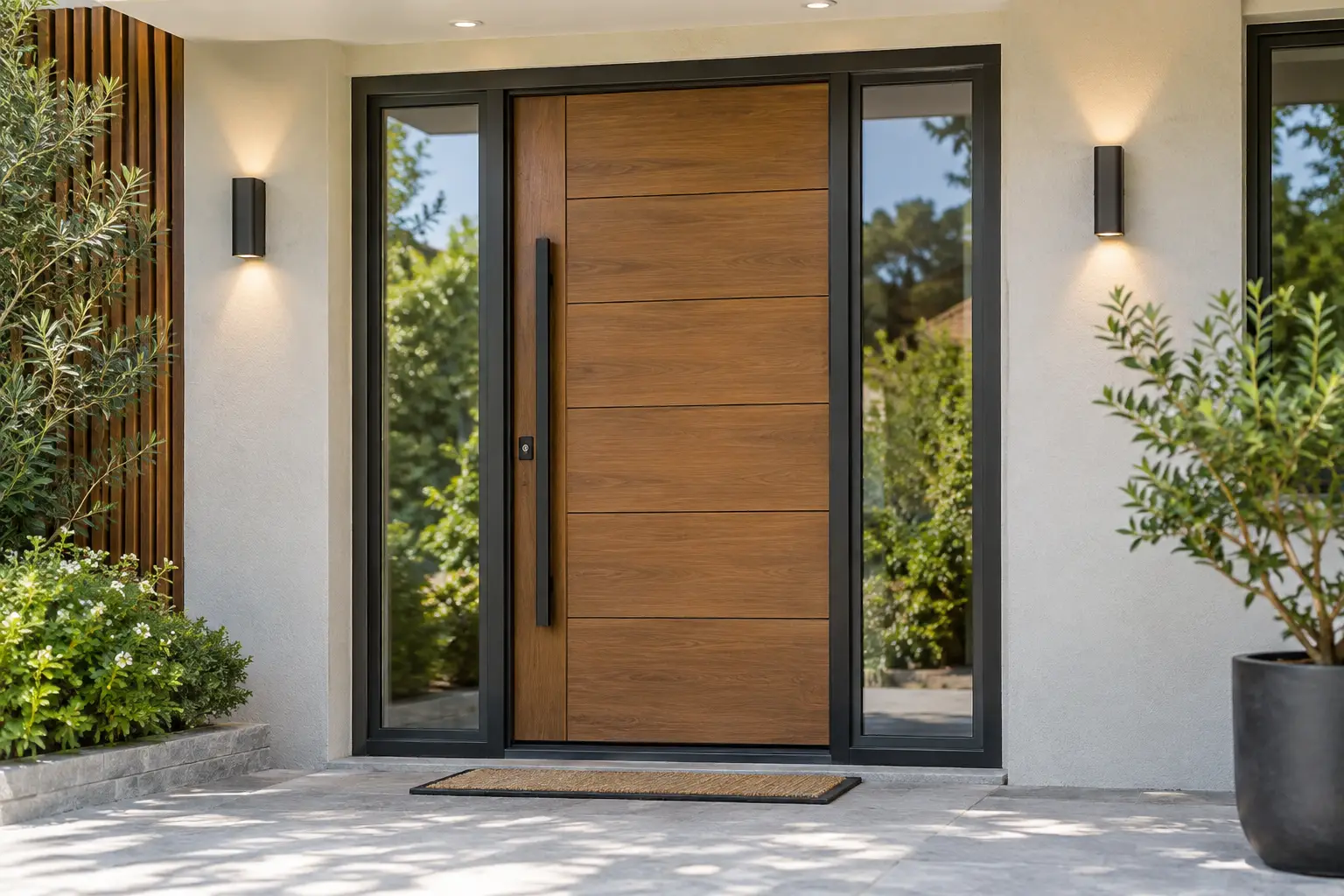
Are Timber Effect Aluminium Front Doors Right?
A front door has to do more than suit a colour palette. It needs to hold its appearance through wet winters, busy family life and daily use, while setting the tone for the whole property. Timber effect aluminium front doors answer that brief for homeowners who value the warmth of natural wood but want the precision, security and lower-maintenance benefits of aluminium.
The appeal is not simply practical. A convincing timber finish can soften a contemporary extension, bring balance to a rendered façade or sit comfortably alongside brick, stone and period detailing. Paired with a made-to-measure aluminium door, it gives a home a distinctive entrance without relying on a standard woodgrain look.
Why choose a timber-effect finish?
Natural timber has enduring character. Its grain, variation and warmth can make an entrance feel established and welcoming. Yet a solid timber door asks for considered care. Depending on its exposure, it may need regular inspection, cleaning and refinishing to protect it from moisture, sunlight and seasonal movement.
A timber-effect aluminium door is designed to retain that visual character with a more stable, high-performance core. The aluminium construction does not swell, warp or split in the way timber can when exposed to repeated changes in temperature and moisture. For homes with an open, weather-facing porch or a coastal location, that distinction can be particularly valuable.
This is not an argument that one material suits every property. A carefully maintained solid timber door remains a beautiful choice for some heritage homes. However, where the priority is a refined timber appearance combined with modern thermal performance, advanced security and reduced maintenance, aluminium offers a compelling alternative.
A finish that should be viewed up close
Not all wood-effect finishes are equal. A flat printed pattern can look artificial, especially across a large door slab or in direct daylight. The quality lies in the depth of the grain, tonal variation and the way the finish works with the door’s proportions, glazing and hardware.
Rhino Aluminium’s Naturale timber-effect collection is intended for homeowners who want a more architectural interpretation of timber. The finish can bring the visual texture of wood to crisp contemporary lines, allowing the entrance to feel individual rather than imitative. Ask to see samples where possible and consider them against your brickwork, render, cladding and external lighting. A shade that feels right indoors may appear very different on a north-facing elevation or in strong afternoon sun.
Timber effect aluminium front doors and property style
The strongest entrance designs do not follow a formula. They respond to the building, the setting and the way the home is used.
For a modern self-build, a dark oak-inspired finish can add warmth against charcoal window frames, pale render or zinc cladding. A wide pivot-style door or full-height side panel can make the entrance feel generous while keeping the composition clean. For a renovated 1930s or Victorian property, a more traditional door layout with carefully proportioned glazing can retain a sense of familiarity without compromising on modern performance.
Extensions often benefit from timber-effect aluminium because it acts as a bridge between old and new. A warm, natural-looking entrance can reference original timber details, while the aluminium construction relates to contemporary bi-fold doors, roof glazing and slim-framed windows elsewhere in the scheme.
Colour and hardware deserve the same attention. A timber-effect slab with a black pull handle creates a confident, contemporary contrast. Brushed stainless steel can feel lighter and more understated. Letterplates, knockers and escutcheons should be selected as part of the overall design, rather than added at the end. On a bespoke entrance, these smaller choices have a noticeable effect on the finished result.
Performance behind the finish
The visual surface is only one part of the door. The frame, seals, locking system, panel construction and installation all contribute to how an entrance performs over time.
Security that supports peace of mind
A premium front door should be engineered as a complete security system, not judged solely by its handle or lock cylinder. Multi-point locking helps secure the door at several points around the frame, while reinforced construction provides strength where it matters. Specifying a door tested to PAS 24 and supported by Secured by Design accreditation offers meaningful reassurance for homeowners, architects and installers alike.
Security specification can vary between designs and configurations, particularly where glazed sections, sidelights or double-door arrangements are involved. It is worth discussing the full opening rather than assuming a high-specification door slab automatically makes every arrangement equivalent. The right solution should match the size of the opening, the required access and the property’s wider security needs.
Thermal efficiency for the entrance hall
The front door is a relatively small part of a home’s external envelope, but it can still influence comfort near the entrance. A poorly insulated or badly fitted door may leave a noticeable cold spot, particularly in a hallway that opens into the main living space.
Aluminium doors use thermal breaks and insulated panels to limit heat transfer through the frame and leaf. At Rhino Aluminium, entrance door U-values are available from 1.0 W/m²K, depending on the chosen design and specification. This supports a warmer-feeling entrance while helping homeowners make a considered choice for refurbishment, extension and self-build projects.
Figures should always be compared like for like. Ask whether a stated U-value applies to the complete door set, including frame and glazing, rather than an isolated panel. The final result also relies on accurate survey and installation. Even an excellent door needs correct fitting, sealed thresholds and properly adjusted hardware to perform as intended.
Weather resistance without a repainting schedule
A timber-effect finish does not mean no care at all. External doors benefit from periodic cleaning, keeping drainage channels clear and checking that seals remain free from debris. Hardware may also require occasional adjustment or lubrication in line with the manufacturer’s guidance.
What aluminium removes is the routine cycle of sanding, staining and repainting commonly associated with exposed timber. That makes it an attractive choice for homeowners who want the look of wood without planning maintenance weekends around the front door. It also provides consistency across wide panels and double-door layouts, where timber movement can otherwise become more apparent.
Designing a made-to-measure entrance
Bespoke manufacture is about more than making a door fit an unusual opening. It gives you control over the visual balance of the whole entrance. The door width, frame sightlines, side panels, glazing position and handle length can be considered together rather than selected from a fixed set of sizes.
Start with the practical questions. Is the entrance used daily with pushchairs, bicycles or shopping? Does the hallway need more daylight? Is privacy from the street a priority? A glazed side panel can make a narrow entrance feel brighter, but the glass choice should account for overlooking. Obscure, textured or partially glazed options can admit light while protecting privacy.
Then consider proportion. A single wide door can create a bold focal point, while double entrance doors can suit grander openings and provide useful occasional access for furniture or equipment. If the property has existing aluminium windows or a rear glazed extension, coordinate frame colours and handle finishes without feeling obliged to match every surface exactly. A timber-effect front door can work as the warmer, more characterful counterpart to darker aluminium elsewhere.
For trade customers, clear drawings, confirmed finished-floor levels and early agreement on opening direction help avoid costly changes later. Made-to-order fabrication rewards careful planning. It ensures the design intent is carried through to the manufactured door rather than compromised on site.
Questions to settle before you order
Before approving a timber-effect design, establish the finished opening size after any render, cladding or threshold work. Confirm whether the quoted price includes the frame, glazing, hardware, delivery and installation, as these details affect both budget and performance.
It is also sensible to ask about lead times, warranty coverage and the security and thermal specification for your exact configuration. A large glazed panel, a double-door arrangement or a highly customised handle may alter the final specification. Clear answers at this stage make the ordering process more straightforward and protect the quality of the finished installation.
A front door is seen every day, but its best qualities are often felt rather than noticed: a secure close, a draught-free hallway, dependable operation and a finish that still looks considered years after installation. Choose the timber tone, glazing and hardware with care, then let the engineered performance do its quiet work.