

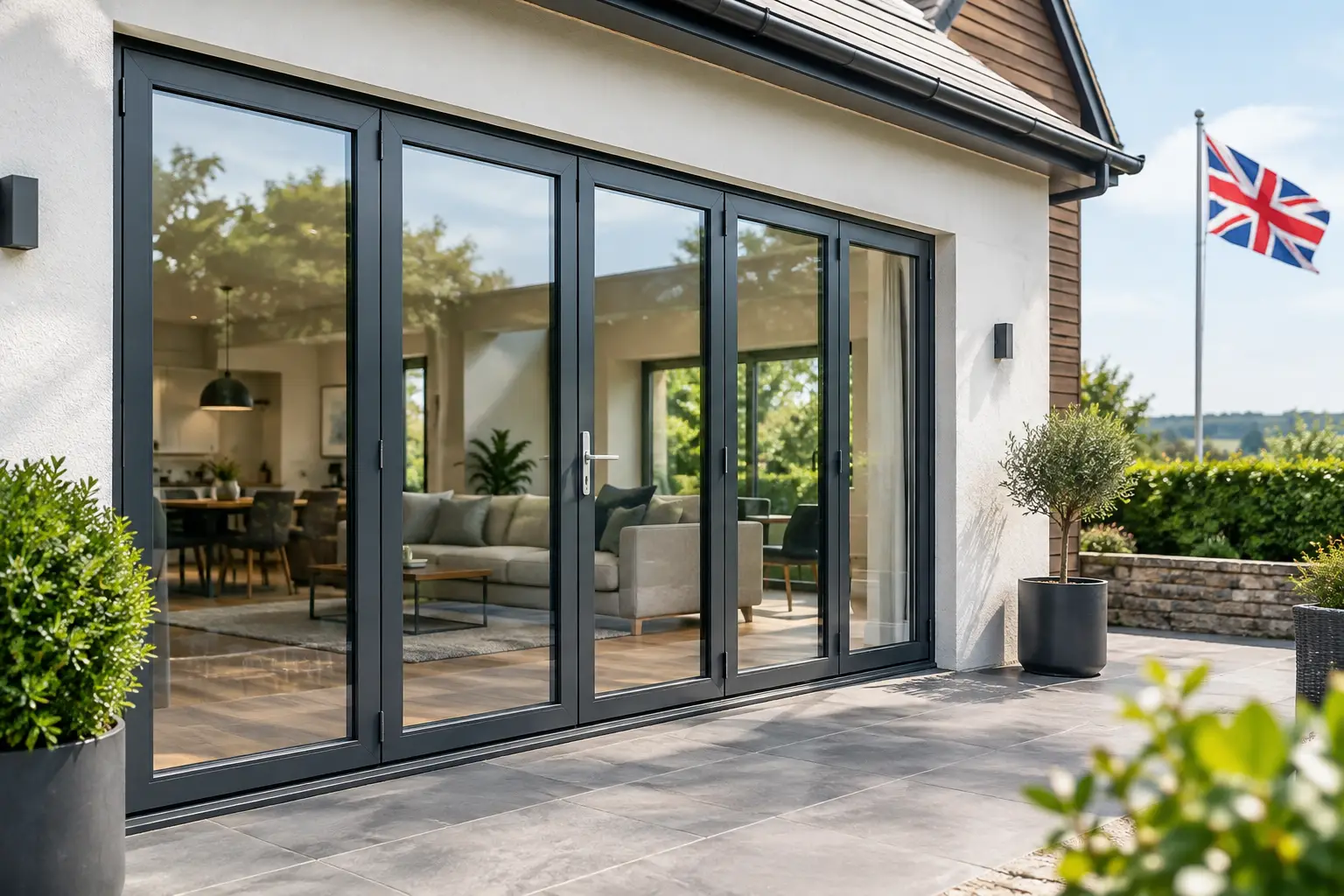
Why Choose British Made Aluminium Doors for Homes?
A front door has a demanding job. It must set the tone for the property, stand up to daily use and British weather, and provide genuine reassurance when the house is empty. British made aluminium doors offer a considered answer to all three, combining made-to-measure design with high-specification security and long-term performance.
For homeowners improving a period property, completing a contemporary extension or building from new, the appeal is not simply that aluminium looks modern. It is the freedom to specify an entrance that belongs to the architecture of the home rather than settling for the nearest standard size, colour or panel layout.
Why British made aluminium doors make a difference
The country of manufacture matters most when your door is not a standard product. A bespoke entrance requires accurate surveying, clear technical communication and fabrication that reflects the final agreed specification. When the door is made in Britain, the journey from design discussion to manufacture is more direct, with fewer compromises introduced by imported stock sizes or fixed overseas production runs.
At Rhino Aluminium, doors are precision manufactured at our factory in Broadstairs, Kent. This gives homeowners and trade customers confidence that the people responsible for fabrication understand the system, the finish and the exact details requested for each project. It also supports dependable lead times and practical support when a specification needs careful attention.
British manufacture is not a guarantee of quality on its own. The meaningful question is how the door is engineered, tested and finished. Look for a manufacturer that can explain the construction, locking arrangement, thermal performance and available glazing, rather than relying solely on a country-of-origin claim.
Design without a standard-door compromise
A premium aluminium entrance door should begin with the proportions of the opening and the character of the building. A narrow urban frontage may suit a strong vertical design with a slim glazed aperture. A wide porch can accommodate double doors or a statement door with fixed side panels. A rendered contemporary home may call for a dark architectural finish, while a brick cottage can gain warmth from a timber-effect surface without the maintenance requirements of timber.
Aluminium is especially well suited to this level of choice because it can create clean lines, detailed panel designs and substantial door leaves without appearing heavy. The material supports both restrained contemporary designs and more traditional styles, making it a credible option beyond ultra-modern homes.
Finishes that shape the first impression
Colour changes the whole character of an entrance. A deep grey or black can frame modern glazing and sharp brickwork; a muted green or blue can soften a traditional façade; a carefully selected bespoke colour can tie the door to window frames, cladding or interior detailing.
There is also value in choosing a finish with more visual depth. Oxide-effect designs bring the character of aged metal to an entrance without the uncertainty of a naturally weathering surface. Timber-effect Naturale finishes provide the grain and warmth people appreciate in wood, while avoiding the regular sanding, staining and repainting associated with a timber front door.
The right finish depends on the building and the desired level of contrast. A door intended to make a confident architectural statement may benefit from a distinct colour or textured effect. Where a quieter result is preferred, a finish that picks up the undertones of the brick, stone or render will often feel more considered.
Details are part of the design
Handles, glazing and side panels should not be left until the end of the process. A long pull handle can reinforce a contemporary door’s vertical proportions, while a more traditional handle may better suit a classic panel arrangement. Obscure, decorative or clear glazing affects privacy, natural light and the appearance of the hallway after dark.
Side panels are particularly useful where the opening is wider than a single leaf. They can add daylight and scale without forcing the main door to become excessively wide. For properties with generous entrances, double aluminium doors create a formal, welcoming approach and offer practical access when moving furniture or large items through the home.
Engineered for security and everyday confidence
An entrance door can look exceptional and still fall short if its security credentials are vague. Security should be designed into the complete assembly, not added as an afterthought with a visually impressive handle or cylinder cover.
For a premium aluminium door, ask about independently recognised standards, the locking system, reinforcement and the construction of the frame as well as the leaf. PAS24 testing provides evidence that a doorset has been assessed against common methods of forced entry. Secured by Design accreditation adds further confidence that the product meets police-preferred security requirements.
Multi-point locking is an essential part of this picture, securing the door at several points around its edge rather than relying on a single central lock. Reinforced construction and carefully specified hinges contribute to resistance against attack, while a correctly fitted frame ensures the components work as intended.
No door can make a home risk-free, and security depends on correct installation and sensible everyday use. However, choosing a tested, properly engineered doorset gives homeowners a stronger starting point than selecting on appearance alone.
Thermal performance that suits the whole home
The front door is a relatively small part of the external envelope, but it is a highly visible one and often sits at the point where people notice draughts. Modern aluminium doors are designed with thermal breaks that reduce the transfer of heat through the frame, helping the entrance feel more comfortable throughout the year.
U-values offer a useful comparison, as they measure how readily heat passes through a building element. Lower figures indicate better insulation. High-performance aluminium entrance door configurations can achieve U-values from 1.0 W/m²K, although the final result will depend on the size of the door, panel or glazing specification, and the complete doorset construction.
Thermal performance should be assessed alongside weather resistance. A door needs effective seals, drainage and precise fabrication to deal with wind-driven rain as well as winter temperatures. This is where made-to-measure manufacture has practical value: a carefully built door and frame are better placed to perform consistently in the opening they were designed for.
What to establish before you place an order
A bespoke door is an investment, so it pays to make the key decisions in the right order. Begin with the opening size and any constraints around thresholds, existing brickwork, porch roofs or internal finishes. Then consider the overall appearance from the pavement and from inside the hallway, where glazing and colour can have a very different effect.
Be clear about the level of privacy you need, particularly if the door faces a public road. Consider whether the property will benefit from a side panel, and decide how often the entrance needs to accommodate wide access. If you are matching windows or other external joinery, ask for guidance on colour and finish rather than relying on a small screen image.
Finally, confirm the performance specification in writing. This should cover security credentials, locking, glazing, thermal values where applicable, weather performance and the scope of installation. For trade customers, accurate drawings and a responsive manufacturing partner help avoid delays on site and ensure the finished entrance reflects the architect’s or homeowner’s original intention.
A door designed around your home
The most successful entrances do not look chosen from a catalogue. They look proportioned for the house, resolved in the right finish and built to perform quietly for years. British made aluminium doors give homeowners the opportunity to combine that individual design with credible security, thermal efficiency and weather resistance.
Start with the details that make your property distinctive, then let the door specification follow. A well-considered entrance is not simply a replacement product at the front of the house. It is a daily welcome, engineered to protect what is behind it.