

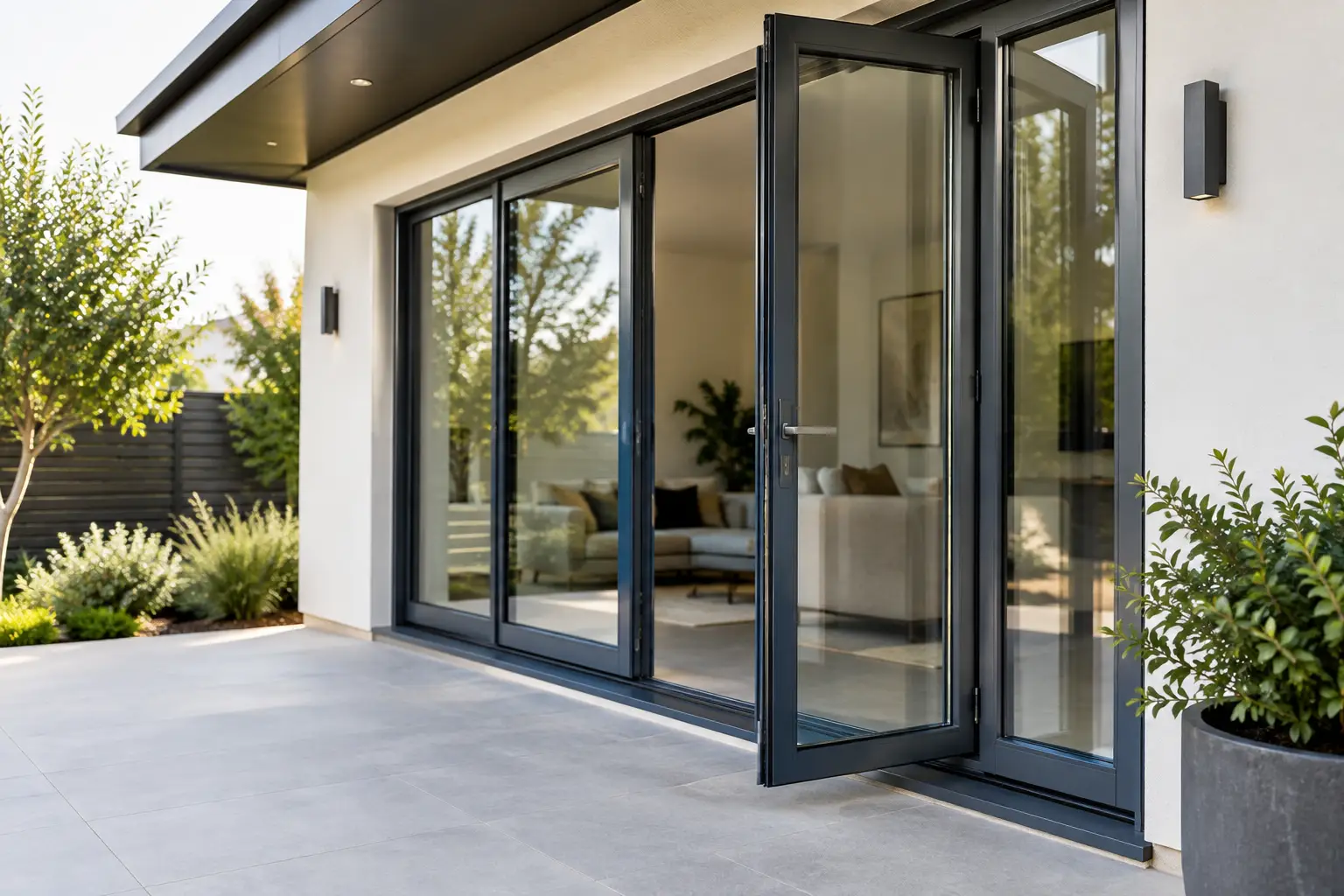
Made to Measure Aluminium Doors for Your Home
A front door is one of the few elements of a home that has to work hard every single day while remaining on show from the street. Made to measure aluminium doors give homeowners the freedom to create an entrance around the property, rather than compromising the property to suit a standard-sized product. The result can be a more considered first impression, a better fit and performance specified for the way the home is actually used.
For a period property, that may mean a traditional door design with carefully proportioned glazing. For a contemporary extension, it could be a wide aluminium entrance door with a full-height side panel, a striking oxide-effect finish and minimal hardware. Either way, bespoke manufacture turns the entrance from a necessary replacement into an architectural feature.
Why Made to Measure Aluminium Doors Are Different
A made-to-measure door is not simply a standard design trimmed to a particular width. It should be fabricated to the precise dimensions and specification of the opening, including the frame, threshold, door leaf, glazing and any adjoining side or top panels. This creates much greater freedom, but it also makes accurate planning essential.
The starting point is the structural opening. Its width and height matter, but so do the condition of the reveal, the finished floor level, the position of internal flooring and the direction in which the door needs to open. An experienced survey will identify whether the aperture is square, whether existing brickwork needs attention and how the threshold can be detailed to provide practical access and weather protection.
It is also worth distinguishing between the overall frame size and the clear opening created when the door is open. A generous-looking entrance can feel restrictive if the active leaf is too narrow for everyday use, prams, furniture or wheelchair access. Conversely, an oversized single leaf can become unnecessarily heavy. Double entrance doors or a fixed side panel may offer the more refined solution, depending on the proportions of the façade.
Aluminium is particularly well suited to this approach because it combines strength with slim, crisp profiles. It can support larger panels and more ambitious glazing layouts without the visual bulk associated with some alternative materials. That strength gives designers room to think beyond a conventional front-door format.
Start With the Character of the Property
The best bespoke door does not follow a trend blindly. It responds to the brick, render, stonework, window frames and architectural era of the house. A clean-lined contemporary door can sharpen the frontage of a modern home, while a more traditional arrangement with decorative glazing may be the right choice for a Victorian or cottage-style property.
Colour is often the first design decision, yet it should be made alongside texture and hardware. A deep black or anthracite finish can provide a confident contrast against pale render. Muted greens, blues and greys can sit comfortably within more established streetscapes. For homeowners looking for a more distinctive statement, oxide-effect finishes bring the visual depth of aged metal, while timber-effect Naturale finishes offer the warmth of wood without the regular staining, painting and maintenance associated with a timber entrance door.
Glazing and side panels change the entrance
Glazing does more than bring daylight into a hallway. It establishes the balance between privacy, security and the appearance of the elevation. Obscure, textured or decorative glass can protect privacy while allowing light through, whereas clear glazing suits entrances where an open, modern feel is the priority.
Side panels deserve the same attention. They can make a standard-width door feel more substantial, add daylight to a dark hallway and create a balanced composition across a wide opening. However, they need to be proportioned properly. A narrow glazed strip may provide a refined accent; an expansive panel can create a more dramatic contemporary entrance, but it should not leave the active door leaf feeling visually lost.
Handles and hardware are the finishing details people notice at close range. A long pull bar creates a different impression from a traditional lever handle, and the choice should reflect both the door design and how the entrance will be used. Consider the position of the letterplate, door viewer, house number and external lighting early, rather than treating them as afterthoughts.
Performance Is Part of the Design
A premium aluminium door should look precise, but its value is proven in the details that cannot be seen from the pavement. Security, insulation, weather resistance and reliable operation are all fundamental to a successful installation.
Look for a door system tested to PAS24 and, where applicable, supported by Secured by Design accreditation. These credentials provide reassurance that the construction, locking and hardware have been assessed against recognised security requirements. Multi-point locking, reinforced sections and quality cylinders are equally significant, because a door is only as secure as the system around it.
Thermal efficiency deserves similar scrutiny. Aluminium conducts heat naturally, so a high-performing entrance door relies on a thermally broken profile and an insulated core to reduce heat transfer. U-values from 1.0 W/m²K can make a meaningful contribution to comfort in the hallway and help limit heat loss through the entrance.
That said, compare like with like. Ask whether a stated U-value applies to the complete door set, including the frame and any glazed elements, rather than the panel in isolation. The right specification will depend on the size of the door, the amount of glass and the project requirements. A large glazed arrangement may need a different solution from a solid, single-leaf front door.
For exposed locations, weather performance should be a central consideration. Driving rain, coastal air and strong winds place greater demands on seals, drainage and installation. A precision-manufactured aluminium system can be an excellent long-term choice, but it must be surveyed and fitted correctly to deliver the weather resistance it was designed to provide.
Specifying Made to Measure Aluminium Doors
Bespoke ordering is most successful when decisions are made in a sensible sequence. Begin with the opening and desired configuration, then establish the opening direction, glazing, finish and hardware. Security and thermal requirements should be considered from the outset, not added once the design is already fixed.
A clear drawing or visual design is useful, particularly for wider entrances with side panels or double doors. It allows you to check sightlines, handle placement and how the door will relate to existing windows. If you are renovating, take account of future changes too. New flooring, external paving or porch works can alter threshold levels and clearances.
At Rhino Aluminium, doors are manufactured in-house in Broadstairs, Kent, giving each project the benefit of exact-to-specification fabrication and close attention to the final detail. This is particularly valuable where a property has an unusual opening, a non-standard configuration or a clear architectural brief that cannot be met by an off-the-shelf design.
For trade customers, precise information at quotation stage helps prevent delays later. Confirm structural opening sizes, finished floor levels, handing, drainage considerations and any site access constraints. For homeowners, a professional survey and detailed quotation offer the same reassurance: everyone should understand exactly what is included before manufacture begins.
What Affects the Cost?
Made-to-measure aluminium entrance doors are a long-term investment, and the price reflects more than the dimensions of the leaf. The chosen collection, finish, glazing, hardware, security specification, side panels and installation requirements all influence the final figure. A simple solid-panel design may offer excellent value, while a large double-door arrangement with specialist glass and a bespoke finish will naturally require a greater budget.
It is tempting to compare quotations only by headline price, but specification matters. Check whether the quote includes the frame, threshold, glazing, handles, locking, delivery, survey and installation. Ask about the stated thermal value and security standard, and establish whether the finish is designed for external use and how it should be maintained.
Aluminium has the advantage of needing very little routine upkeep. Occasional cleaning of the surface, glass, drainage channels and moving parts will help preserve its appearance and operation. Unlike painted timber, it does not need regular refinishing to keep its colour and finish looking composed.
The right door should feel intentional before it is opened and reassuring once it is closed. Give the design, proportions and performance equal weight, and your new entrance can continue to earn its place on the front of the house for many years.