

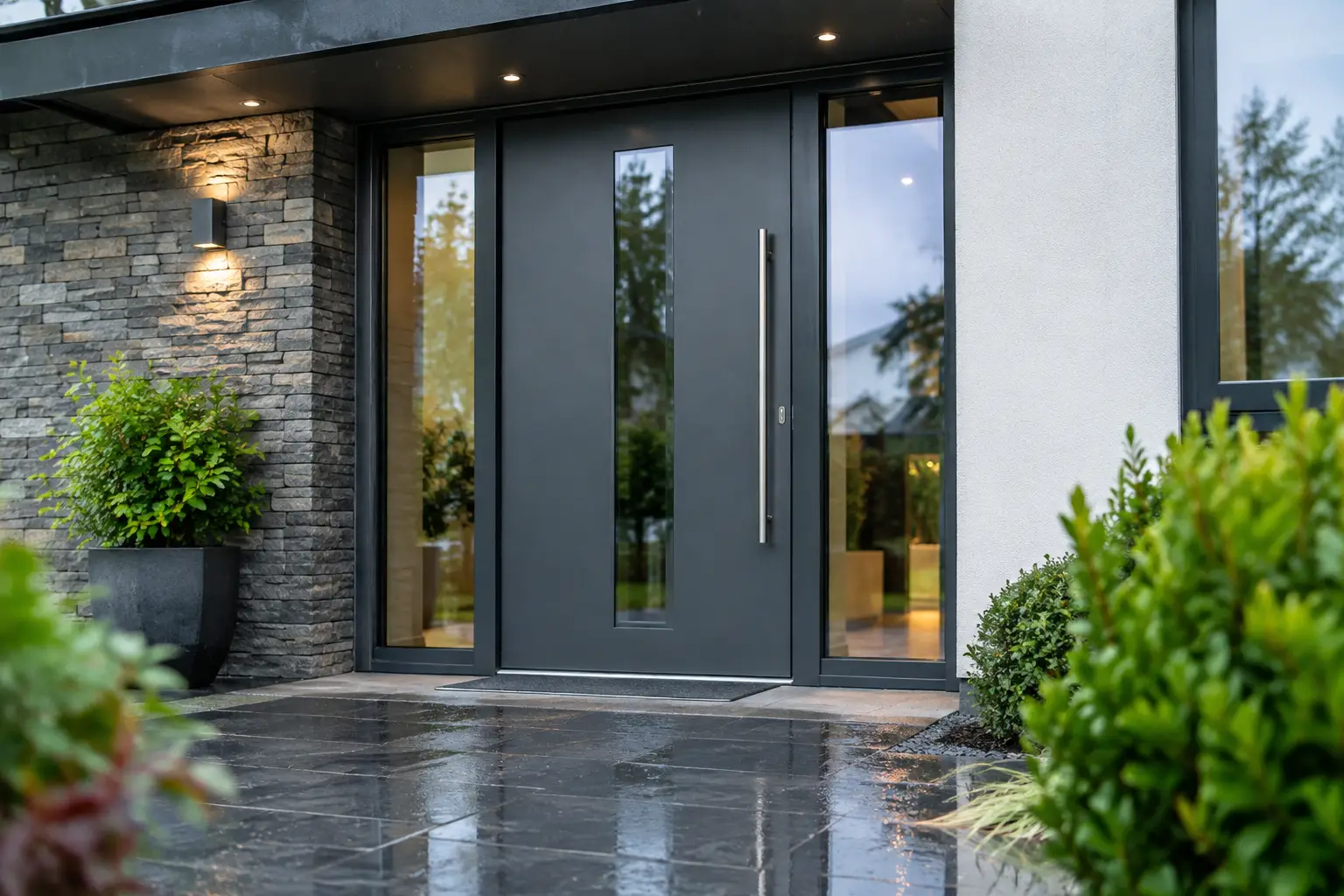
Weather Resistant Aluminium Front Doors That Last
A front door has to face far more than daily comings and goings. Driving rain, frost, strong sunlight and coastal air all test its finish, seals and structure over time. Weather resistant aluminium front doors are designed to meet that challenge while giving your home a distinctive, made-to-measure entrance that does not compromise on security or style.
For homeowners planning an extension, renovation or self-build, weather performance should be considered early. It affects how a door looks after years of exposure, how comfortable the hallway feels in colder months, and how confidently it stands up to the British climate.
What makes an aluminium front door weather resistant?
Weather resistance is not one feature. It is the result of careful engineering across the whole door set: the aluminium profile, insulated core, glazing, perimeter seals, drainage design, threshold and professional installation all have a role to play.
Aluminium itself is particularly well suited to external doors. Unlike timber, it will not absorb moisture, swell or rot. Unlike some lower-specification materials, it maintains its shape exceptionally well through changing temperatures. This stability helps the door leaf sit correctly within its frame, so the weather seals can continue to do their job.
A premium aluminium entrance door should also use a thermally broken frame. This means the inner and outer aluminium sections are separated by an insulating barrier, reducing the route for heat to pass through the metal. It is an essential detail in a material valued for strength and slim, architectural profiles.
The finish matters too. High-quality powder-coated aluminium provides a durable surface that is made for exterior use. It resists fading and deterioration far better than a painted timber door that may need regular attention. For homes seeking a more individual finish, oxide-effect and timber-effect doors offer the visual character of aged metal or natural wood without the maintenance concerns associated with those materials.
Weather resistant aluminium front doors for UK homes
The UK climate is varied, and the right specification depends on where your property sits. A sheltered suburban entrance under a deep porch faces a different set of conditions from a coastal home in Kent, an exposed rural property or a house on a windswept hill.
For exposed locations, attention should move beyond the door slab itself. A carefully designed threshold, effective compression seals and correctly managed drainage are vital to limiting water ingress. Side panels and glazed sections must be specified with the same care, as they form part of the overall entrance system rather than being simple decorative additions.
Installation is equally significant. Even an exceptional door cannot perform as intended if it is fitted out of square, sealed poorly around the frame or set at the wrong level. Made-to-measure manufacture helps avoid the compromises often needed when adapting a standard-sized product to an irregular opening. Precise surveying and fabrication allow the door, frame and any adjoining panels to work together as designed.
There is also a practical distinction between weather resistance and being completely impervious to every condition. In severe wind-driven rain, especially where there is no shelter at all, every entrance is under greater pressure. A specialist supplier should discuss the property’s exposure honestly and recommend a suitable configuration, threshold and glazing arrangement rather than treating every opening in the same way.
Thermal performance without losing design freedom
A draughty entrance can make the whole ground floor feel less comfortable. It can also create condensation around poorly insulated frames and increase the demand on your heating system. This is why thermal performance should be considered alongside appearance from the first design conversation.
High-specification aluminium doors can achieve U-values from 1.0 W/m²K, depending on the chosen design and glazing. In straightforward terms, a lower U-value indicates less heat loss. The exact result will vary according to door size, panel arrangement, glass specification and hardware, so it is worth asking for performance information that relates to your proposed entrance rather than relying on a broad claim.
Glazed front doors and side panels deserve particular consideration. They can bring valuable daylight into a dark hallway and create a lighter, more welcoming façade, but glass selection affects privacy, heat retention and solar gain. Obscure, textured or decorative glazing can provide privacy without closing off the entrance, while higher-performance units help maintain comfort through winter.
Aluminium gives designers considerable freedom here. A wide single door, double entrance doors, tall side panels and contemporary glazed layouts can be created with precise sightlines and a clean finish. The choice is not simply between a warm home and an impressive entrance. With the right system and specification, both are achievable.
Security and weather performance work together
A secure entrance must remain secure after years of use and exposure. A door that shifts, deteriorates or develops a poor fit can affect more than its appearance. It may also compromise the reliable operation of locks, hinges and seals.
Precision manufactured aluminium construction provides a stable foundation for high-performance security hardware. Multi-point locking engages the door at several points around the frame, while reinforced construction and quality hinges support the weight of a substantial entrance door. For additional reassurance, homeowners should look for independently tested credentials such as PAS24 and Secured by Design accreditation where applicable.
Security should never be treated as a bolt-on extra. It is part of the door’s engineering, from the frame and lock preparation to the cylinder, handle and glazing specification. The same exceptional attention to detail that keeps out wind and rain supports a tighter, more dependable closing action every day.
Choosing a finish that will continue to suit your home
The most successful front doors feel right for the building rather than following a short-lived trend. Aluminium is particularly useful in this respect because it can be configured for sharply contemporary architecture, traditional homes or properties that sit somewhere between the two.
A deep matt black or anthracite grey finish can give a modern extension a crisp, refined appearance. Softer neutral colours may complement period brickwork or rendered elevations. Timber-effect Naturale finishes are an appealing option where the warmth of wood suits the property, but regular sanding and repainting does not. Oxide-effect finishes offer a more expressive, architectural surface that can work beautifully with brick, stone and dark metal detailing.
Colour should be judged in the context of the whole elevation. Consider window frames, roof materials, external lighting, brick tone and the colour visible within the entrance hall when the door is open. Samples viewed in natural daylight are invaluable, as a colour can look markedly different on a north-facing façade than it does in a bright showroom.
Hardware completes the design and should be selected for practical use as well as visual effect. Long pull handles make a strong statement on tall contemporary doors, while more traditional hardware may better suit a classic façade. Think about daily use: wet hands, shopping bags, children coming home from school and how easily the door can be operated by everyone in the household.
Care that protects the finish and performance
One of aluminium’s principal advantages is low maintenance, not no maintenance. A small amount of regular care helps preserve the finish and allows small issues to be spotted before they become inconvenient.
Washing the door and frame occasionally with warm water and a mild, non-abrasive cleaner will remove airborne dirt, salt deposits and traffic film. This is especially worthwhile in coastal areas, where salt in the air can settle on external surfaces. Avoid abrasive pads, harsh solvents and aggressive cleaners that could damage the coating.
It is also sensible to clear debris from thresholds and drainage channels, check that seals remain clean and intact, and ensure locks and hinges operate smoothly. If the door begins to catch, feels difficult to close or shows any sign of water tracking around the frame, arrange an inspection rather than forcing the mechanism.
Specify for the entrance you actually have
A front door is one of the few parts of a home that must perform as an architectural feature, a security barrier and a weather shield at the same time. Choosing a made-to-order aluminium door gives you the opportunity to address those demands as one considered design, rather than making do with an off-the-shelf size or finish.
Rhino Aluminium precision manufactures bespoke entrance doors in Britain, allowing the design, dimensions, colour, glazing and hardware to be shaped around the property. For a home exposed to the elements, that level of specification is not an indulgence. It is the difference between a door that merely looks impressive on day one and one that continues to welcome you home in every season.